Last verified: August 2026
Planning an Egypt itinerary 7 days long? This is the exact Cairo → Aswan → Luxor route we run for private, Egyptologist-led tours — real entrance fees, honest routing advice, and day-by-day timing that answers exactly what to do in Egypt for a week without wasted travel days or rushed sightseeing.
If you’d rather have us handle the logistics, our custom Egypt tours follow this same 7 day Egypt itinerary, with flights, Nile cruise, hotels, and a licensed guide included.
Is Seven Days in Egypt Too Little?
Seven days in Egypt is enough—if you follow the right route and don’t try to see everything. The Cairo-Aswan-Luxor corridor passes through all the major UNESCO World Heritage sites in both Upper and Lower Egypt. In just one week, you can stand inside the Great Pyramid of Giza, wander among the ornate tombs of the Valley of the Kings, cruise along the temple-lined banks of the Nile, and watch the sunrise over Luxor from a hot air balloon.
A week in Egypt leaves plenty of other places untouched: Alexandria, the White Desert, Siwa Oasis, and the Red Sea coast. Egypt certainly holds a lot of incredible sights to fill a month-long trip, and if you have time for a ten-day or fourteen-day visit, do so. But an effective Egypt itinerary over a week will still leave you impressed by the country.
The biggest pitfall people make is overfilling their days. Each extra day traveling around Egypt is a day away from visiting some temples. The itinerary below avoids such mistakes.
Best Week-Long Itinerary for Egypt
The best and most rewarding itinerary for a one-week stay in Egypt is a south-to-north trip. After reaching Cairo from home, you will fly within the country to Aswan, then cruise down the Nile to Luxor before returning to Cairo to catch your flight home.
This itinerary is exciting in terms of building up anticipation. Your first exposure will include the warm Nubia of Aswan and Philae Island, followed by the impressive Abu Simbel, Kom Ombo, and, finally, the world-renowned sites of Luxor. You can reserve the last two experiences for when you arrive in Cairo, which would be the Pyramids and the Grand Egyptian Museum, and end your week with the two best experiences in Cairo.
This itinerary involves two short domestic flights (one from Cairo to Aswan and one from Luxor to Cairo) and a cruise along the Nile River from Aswan to Luxor. Thus, you will unpack only three times throughout your one-week holiday.
At a glance:
| Day | Location | Key Experience |
|---|---|---|
| Day 1 | Cairo (arrive) | Khan El Khalili, orientation |
| Day 2 | Cairo | Pyramids of Giza, Grand Egyptian Museum |
| Day 3 | Aswan | Fly south, Philae Temple, Nubian Village |
| Day 4 | Aswan / Nile | Abu Simbel day trip, board cruise |
| Day 5 | Nile cruise | Kom Ombo & Edfu temples, felucca |
| Day 6 | Luxor | Valley of the Kings, Karnak, hot air balloon |
| Day 7 | Cairo (depart) | Old Cairo or Citadel, international flight |
What to Do in Egypt for a Week: Quick Recap
If you only have one week, here’s exactly what to do in Egypt for a week without missing anything essential:
- Explore the Pyramids of Giza and the Great Sphinx at sunrise.
- Spend half a day inside the Grand Egyptian Museum.
- Fly to Aswan and visit Philae Temple and a Nubian village.
- Take a sunrise trip to Abu Simbel.
- Sail the Nile between Aswan and Luxor, stopping at Edfu and Kom Ombo.
- Explore the Valley of the Kings, Karnak, and Luxor Temple.
- Optional: ride a hot air balloon over Luxor at dawn.
Each of these is covered day by day below, with real ticket prices and timing.
7-Day Nile Cruise in Egypt: Sea or Land Tour?
This is the most important decision when planning your 7-day Nile cruise, and your choice largely depends on your travel style.
The Nile Cruise Option
For many of our customers, the preferred Nile cruise is a 7-day one. The itinerary usually consists of two nights in Cairo, three or four nights on a Nile cruise to and from Aswan and Luxor, and a guided visit to the temples of Edfu and Kom Ombo by an Egyptologist.
However, there are various reasons why the Nile cruise is a better choice. For instance, visiting two of the best-preserved temples, namely Edfu and Kom Ombo, is not feasible on its own, since they require a guide to enter, and there is no public transport, making it difficult to manage without the cruise. Unpacking would only need to be done once during your Nile cruise, as it is much easier than handling hotel check-out procedures every day on land trips.
Economy cruises cost around $450-$500 for a three-day stay. Four- and five-star cruise costs vary by quality and usually range from $800 to $1,500 per traveler. A luxury dahabiyya cruise would cost $2,500 or more per passenger. In general, we suggest going for mid-range cruises because they offer comfortable beds, excellent air conditioning, and yummy food.
Overland Option
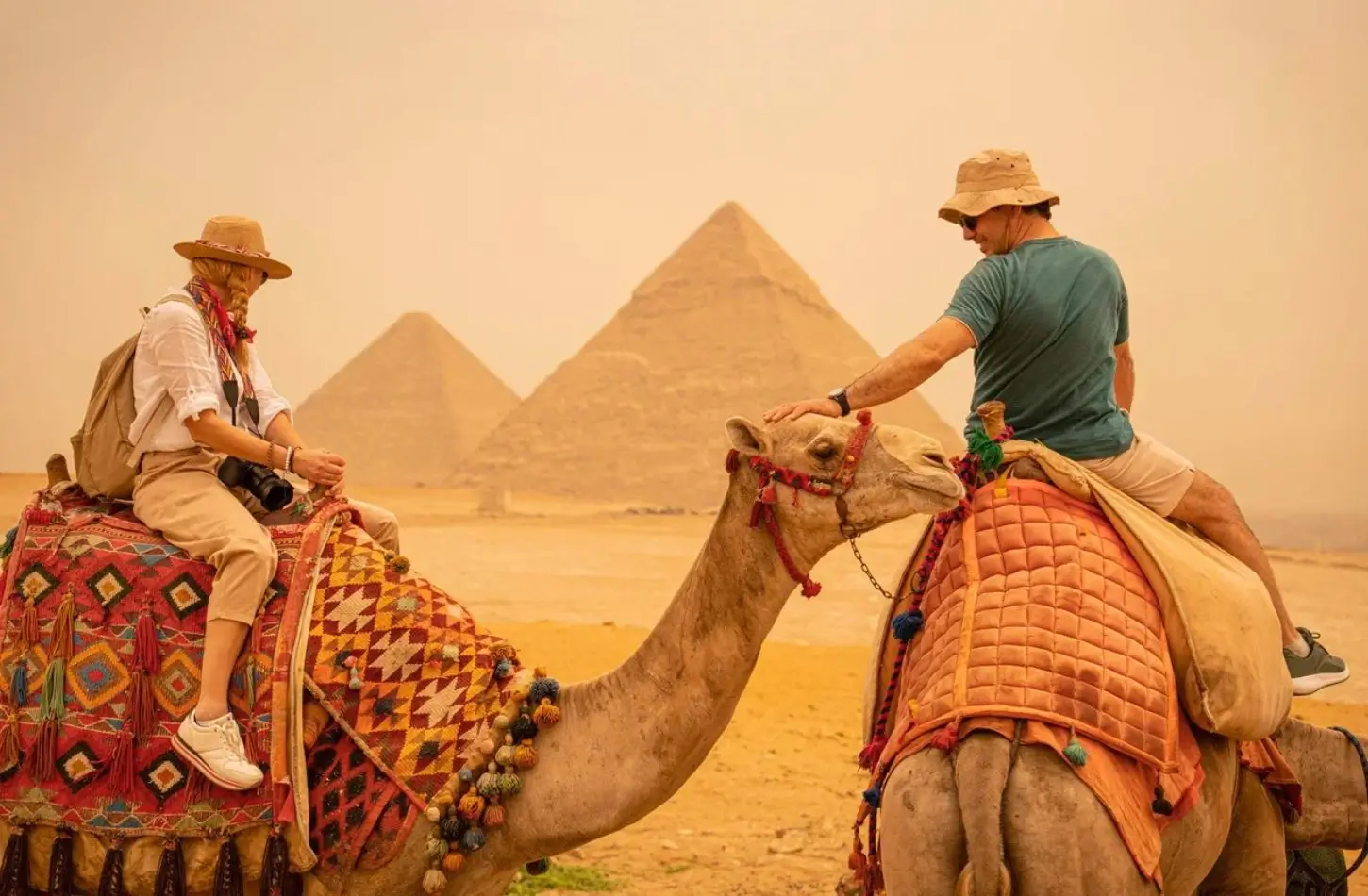
An overland route provides you with much greater freedom. If you are an experienced traveler seeking spontaneity, you will certainly enjoy this type of tour. With this option, you can stay in hotels in all cities, use domestic flights and cars to get around. This is a perfect option for travelers who would like to spend more time in one place, have specific accommodation needs, or simply do not like cruises.
Nevertheless, you still have to visit the temples of Edfu and Kom Ombo. Without the Nile cruise, you would need another day of traveling by bus or car from Luxor just to visit these temples. Most travelers going overland tend to skip a week-long visit to Egypt, which is too bad since the Temple of Horus in Edfu is the best-preserved temple in Egypt.
Which one is best for you?
If this is your first time in Egypt, choose the Nile cruise. It is more efficient and more immersive, and it removes all the logistical stress from the Upper Egypt portion of your trip. If you are returning to Egypt or prioritize flexibility above all else, the land-based option gives you more room to breathe.
Egypt Itinerary 7 Days — Day-by-Day Breakdown
Day 1 – Arriving in Cairo
Meet up with your guide or transfer service at Cairo International Airport. Register at your hotel, preferably near the Giza Plateau, for a smooth start on Day 2, and relax for the rest of the afternoon.
In case your arrival time is early enough to spare an afternoon, the evening in the Khan El Khalili bazaar is the ideal, stress-free way to begin your Egypt adventure. Located in Islamic Cairo, the district has been a market since the fourteenth century. Its alleys are narrow, lit by lanterns, and bustling with sounds from blacksmiths, spice dealers, and coffee shops.
Make a stop at Café El Fishawy, which has been serving travelers mint tea and shisha for over two and a half centuries. It remains open day and night. Overnight in Cairo.
Day 2 — Pyramids of Giza and the Grand Egyptian Museum
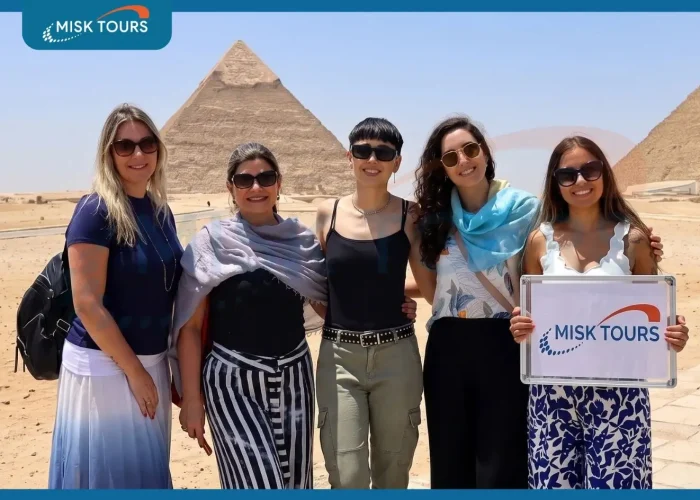
Arrive at the Giza Plateau no later than 7:30 am. Absolutely imperative. Starting at 10 am, the bus tours will begin arriving, and things will get very crowded. During the early morning hours, especially during winter, you will find yourself at the foot of the Great Pyramid of Khufu in a rare moment of calmness. And being there in a peaceful state of mind, facing the only remaining wonder of the Ancient World, is probably one of the most rewarding feelings of being in Egypt.
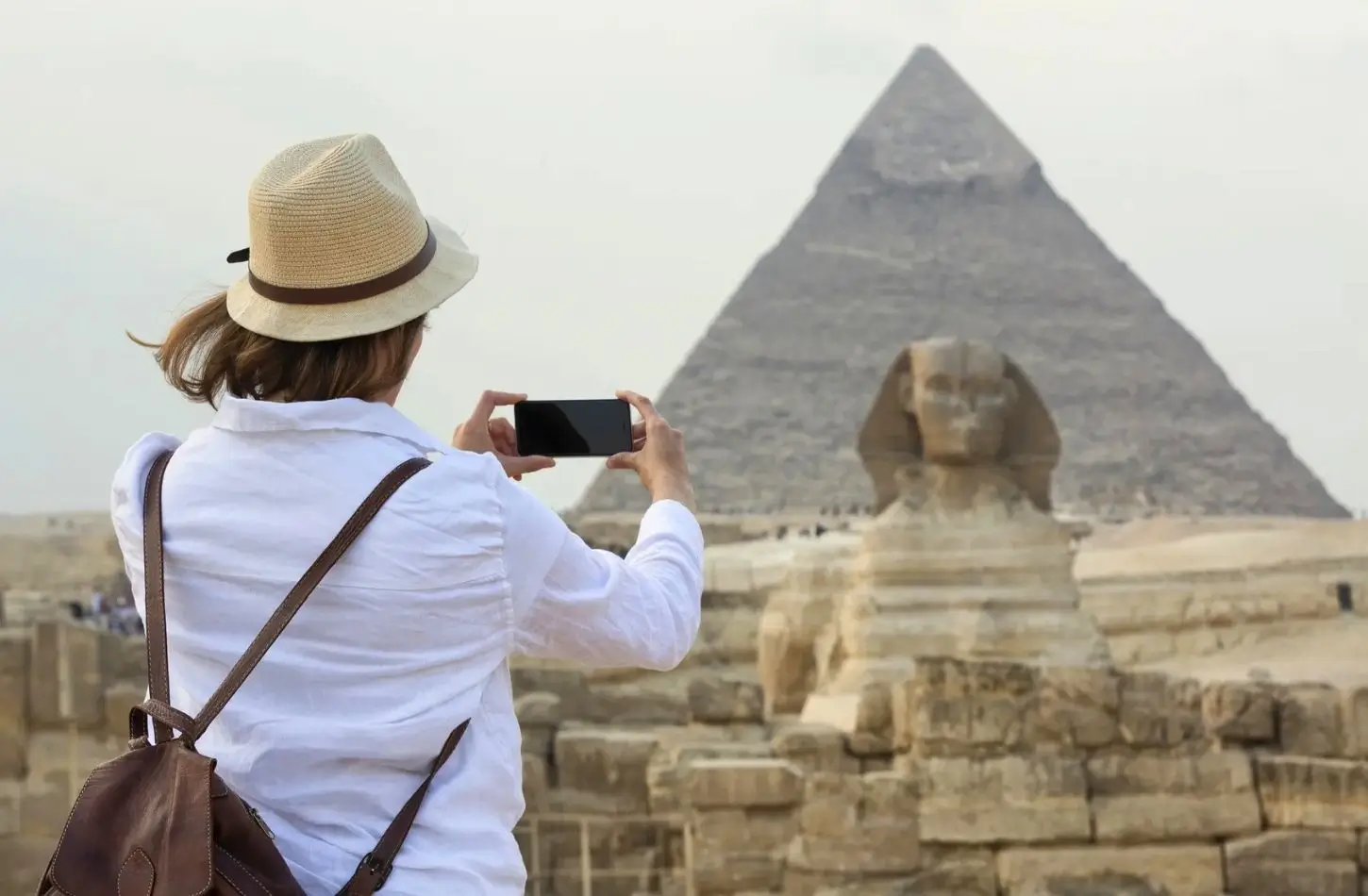
The site includes three pyramid complexes (Khufu, Khafre, and Menkaure), the Great Sphinx, and a couple of satellite pyramids and funerary temples. The regular admission price to the Giza Plateau includes entry to all three pyramids and access to the Great Sphinx viewpoint. Admission into the Great Pyramid of Khufu costs 1,500 EGP (approximately $30 USD) and requires crawling up a very narrow passageway into the King’s Chamber.
Following the plateau visit, spend the rest of the day exploring the Grand Egyptian Museum (GEM), the largest archaeological museum constructed to date for any single civilization. Its main exhibition, the complete Tutankhamun collection with over 5,400 pieces of art, which includes his golden death mask, on view for the very first time, is a sufficient reason for you to allocate a minimum of three to four hours here. The entrance fee at the GEM is 1,200 Egyptian Pounds ($25 USD). Spend the night in Cairo.
Entry tickets — Cairo:
| Site | Standard Entry | Add-ons |
|---|---|---|
| Giza Plateau (exterior) | 700 EGP (~$14.50) | Khufu interior: 1,500 EGP (~$30) |
| Grand Egyptian Museum | 1,200 EGP (~$25) | Special exhibitions: +500 EGP |
| Saqqara (if adding) | 550 EGP (~$11.50) | Djoser Pyramid: +280 EGP |
Remember that by 2026, most tourist attractions will have gone cashless, accepting only credit cards. Verify this information before your trip.
Pro tip from the Misk Tours Team: Once inside the GEM, head straight to the Tutankhamun galleries, then explore the rest of the museum in reverse order. This way, everyone is going back-to-front, while you’ll enjoy fifteen minutes of alone time looking at the things that 95 percent of other tourists want to see.
Day 3 — Fly to Aswan: Philae Temple, High Dam & Nubian Village
Catch the morning domestic flight from Cairo to Aswan, operated by EgyptAir, lasting about an hour and 15 minutes and priced between 70 and 90 dollars per person one way.
Unlike Cairo, Aswan has a very different face of Egypt. Here, things move at a slower pace. You’ll get to see a wider, calmer Nile that turns almost blue-green. Also, unlike Cairo, the population of Aswan consists mainly of Nubians, whose vibrant culture colors everything from brightly painted houses to fabrics.
The first stop upon arriving in Aswan should be the Aswan High Dam, completed in 1970 with Soviet aid. The dam controls the Nile River floods and generates electricity for much of Egypt. Take a motorboat from the dam to Philae Island and visit the Temple of Isis, one of the most beautiful temples in all of Egypt. It has an amazing tale behind it. Due to rising water levels resulting from the construction of the Aswan Dam, the temple was moved stone by stone by UNESCO and other nations to its present location on higher ground. Ticketing costs 550 Egyptian pounds (~$11.50), while the motorboat ride costs 200-400 pounds.
In the later part of the afternoon, take an excursion to a Nubian village by boat (felucca). It will certainly be an unhurried trip: vibrant painted rooms, hand-made hibiscus tea, and maybe even the local family’s pet crocodile kept in a tank outside (it happens more often than you think). Most of our clients say that it was one of the top three experiences from their entire tour.
For cruise passengers, it is time to join your ship. Overnight stay in Aswan (Hotel/Cruise ship).
Day 4 — Abu Simbel at Dawn
The only thing that absolutely cannot be skipped on your 7-day Egypt travel plan is Abu Simbel.
Leave around 4:30-5:00 am to spend three hours driving to Abu Simbel southwards through the Nubian Desert, heading towards the Egyptian-Sudanese border. The convoy system no longer applies to independent travelers, but your travel agency will provide the details. Seeing the sunrise and the rays of the rising sun fall on the giant stone faces of Ramses II is an experience like none other.
The Abu Simbel temples—the Great Temple of Ramses II and the smaller Temple of Nefertari—were carved directly into the sandstone cliff face around 1264 BC. Like Philae, they were relocated during a UNESCO rescue operation in the 1960s and 70s, this time to protect them from the rising waters of Lake Nasser. Ramses II designed the temples with such precision that twice a year, on October 22 and February 22, the sun’s rays penetrate 60 meters into the inner sanctuary, illuminating three of the four statues of deities. The fourth, the god of the underworld, was deliberately left in shadow. This phenomenon persists even in the relocated temple, demonstrating the engineering prowess of 3,300 years ago. A regular ticket costs 750 Egyptian pounds (approximately US$15.50). During the Sun Festival (October 22 and February 22), the price rises to 1,200 Egyptian pounds (approximately US$25), and tickets must be booked well in advance.
Return to Aswan in the early afternoon. If you are on a Nile cruise, the ship will begin sailing north. Optional: Stop at Kom Ombo at sunset to visit the Double Temple dedicated to Sobek (the Crocodile) and Horus (the Falcon) – a unique double structure with a symmetrical design, and the only temple in Egypt dedicated to two deities simultaneously. Entrance fee: 300 Egyptian pounds (approximately US$6).
Overnight on a Nile cruise (or in an Aswan hotel for land excursions).
Entry tickets — Aswan & Abu Simbel:
| Site | Standard Entry |
|---|---|
| Philae Temple | 550 EGP (~$11.50) + boat |
| Abu Simbel | 750 EGP (~$15.50) |
| Abu Simbel — Sun Festival dates | 1,200 EGP (~$25) |
| Kom Ombo Temple | 300 EGP (~$6) |
Day 5 — Sail the Nile: Edfu & the Felucca at Sunset
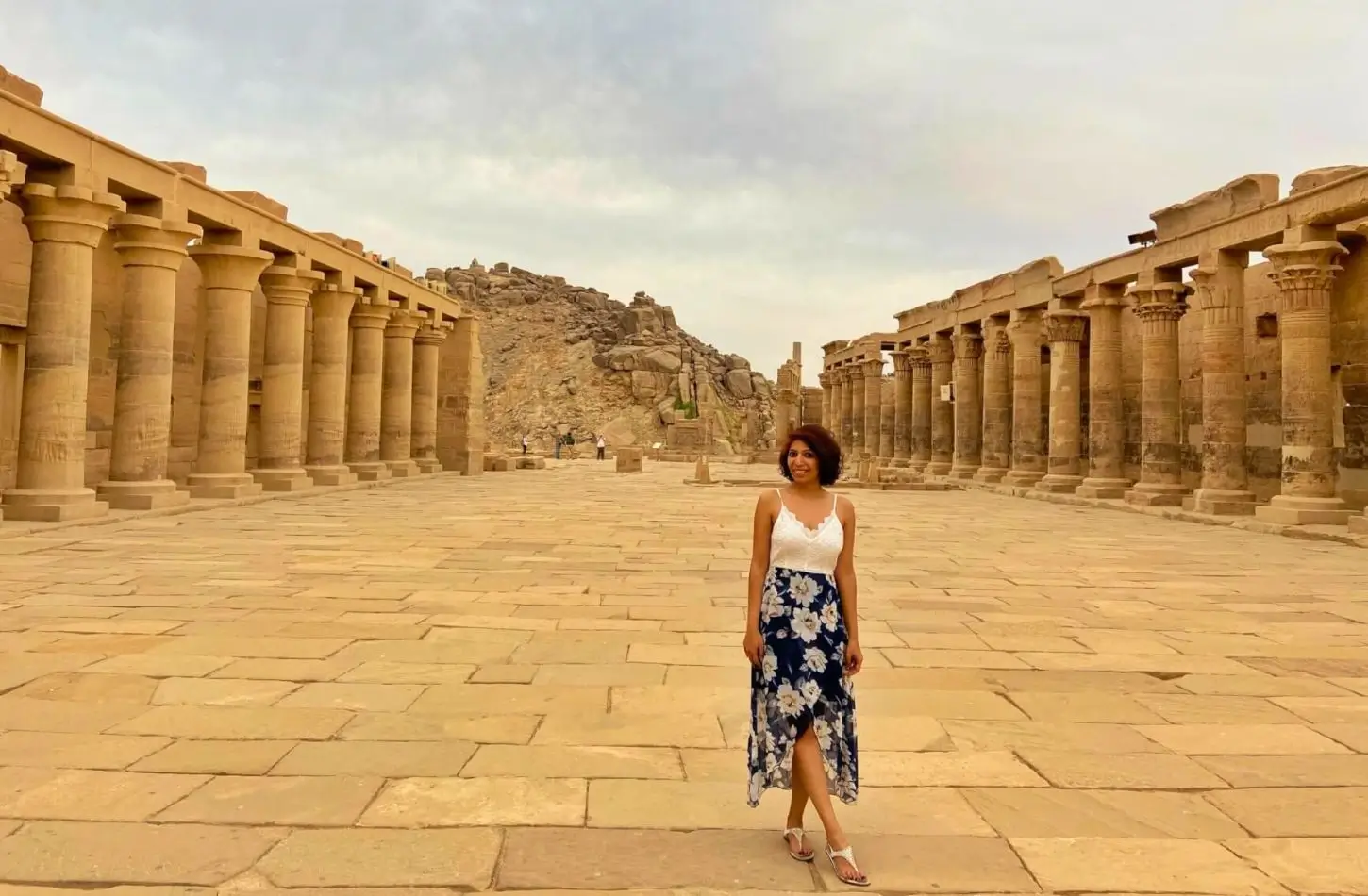
Wake up on the Nile. If you’re cruising, this will be your moment: slowly cruising northward through sugarcane fields and date palm trees, along the banks of the Nile, completely untouched since ancient paintings adorned the walls of the tombs more than three thousand years ago. Egrets stand knee deep in the waters. Farmers till the soil of the same fields and by the same river that nourished Ancient Egypt for thousands of years.
Your destination today will be Edfu and the Temple of Horus, which took almost two centuries to build between 237 and 57 BCE. The Temple of Horus is one of the best-preserved temples in Egypt, with all its structures and painted walls still intact, offering insight into religious practices during the Ptolemaic period. You will get there by carriage from your ship through the small streets of Edfu, and entry costs 450 Egyptian pounds (~9.5 US dollars)
For those who were to go to Kom Ombo on Day 4, your visit today will be a free afternoon and will be your best-kept secret when you do the Nile tour. Take a felucca from your cruise ship docks as the sun sets. The felucca is one of Egypt’s oldest boats, used for centuries; its sails move gently in the breeze with almost no sound.
Onwards to Luxor, over the Nile.
Day 6 — Luxor: Valley of the Kings, Karnak & Hot Air Balloon at Sunrise
Luxor is ancient Thebes, the capital of Egypt at the height of its Pharaonic power, and in a single day, there is still enough to discover. If you’d like to experience a hot air balloon ride, which we highly recommend, you should set off early.
Optional but spectacular: Hot air balloon ride during sunrise
Pick-up from your hotel or cruise ship around 5:00 am. The hot air balloon takes off before sunrise and floats over the West Bank while the sun rises – right over the Valley of the Kings, Hatshepsut’s temple shining above the limestone cliffs, the Nile River shining in silver as far as the eye can see. Duration: 45-60 minutes. Price: 80-150 USD. Book ahead of time, especially during peak season (October to April), since places fill up quickly. Tipping the pilot and the ground crew staff is customary – about 50-100 EGP each.
West Bank (morning tour):
The Valley of the Kings is where New Kingdom pharaohs were buried in underground tombs dug into the limestone hills of the West Bank. The basic ticket price of 750 EGP (~15.50 USD) allows you to visit three tombs from the pool of 10 tombs open to the public. They are all beautifully painted with scenes from the Books of the Underworld, such as the Book of the Dead and the Amduat, and their state of conservation is incredible considering their age: around three thousand years old!
Entry to Tutankhamun’s tomb (KV62) requires a separate ticket costing 700 Egyptian pounds (approximately US$14.50). Though smaller than most royal tombs, the burial chamber still holds the boy king himself in his outer coffin, and standing in the room where Howard Carter opened the sealed door in November 1922 is an almost indescribable experience. It’s well worth the extra cost.
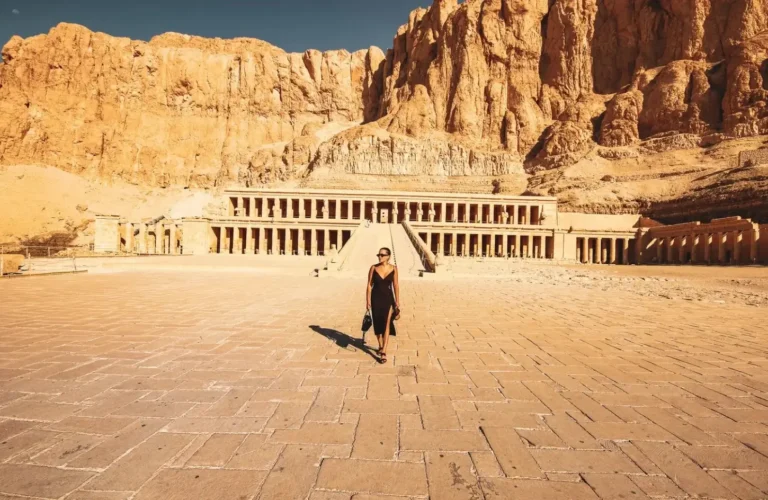
Also on the West Bank are the Temple of Hatshepsut at Deir el-Bahari (400 Egyptian pounds / approximately US$8.50)—a three-story columned structure rising majestically from the desert against a backdrop of towering limestone cliffs, built for Egypt’s most successful pharaoh—and the Colossi of Memnon, two 18-meter-tall seated statues of Amenhotep III that once stood at the entrance to a mortuary temple that disappeared 3,400 years ago. Visiting the statues is free.
The Colossi of Memnon are free. East Bank (afternoon):
The Karnak Temple Complex is the largest religious building ever constructed anywhere on Earth and requires ample time to explore. This site represents nearly two thousand years of construction by successive pharaohs, each adding courtyards, towers, obelisks, and shrines to a complex that eventually covered more than 100 hectares. The Hypostyle Hall—with its 134 columns, some reaching 23 meters in height, and covered floor to ceiling with intricately carved and painted reliefs—is arguably the most breathtaking interior space in ancient Egypt. Admission is 300 Egyptian pounds (approximately US$6). Allow at least two hours for your visit. We recommend purchasing the Luxor Pass ($130 USD for the standard version / $250 USD for the premium version) if you plan to visit multiple sites in Luxor over several days. This pass covers most sites on both the West and East Banks for a fixed fee.
The Karnak Temple complex is the largest religious building ever constructed and requires ample time to explore. Conclude your day with a visit to the Luxor Temple on the East Bank Corniche, which is illuminated at night. Its sandstone obelisk, the Sphinx Courtyard with its ram-headed statues, and the reflections of the temple towers on the Nile are truly breathtaking. The entrance fee is 300 Egyptian pounds (approximately $6 USD). The temple’s stunning evening lighting makes it well worth staying until 9 or 10 PM. Overnight in Luxor (hotel or cruise ship).
Entry tickets — Luxor:
| Site | Standard Entry |
|---|---|
| Valley of the Kings (3 tombs) | 750 EGP (~$15.50) |
| Tutankhamun’s Tomb (extra) | 700 EGP (~$14.50) |
| Seti I Tomb (extra, extraordinary) | 2,000 EGP (~$41.50) |
| Hatshepsut Temple | 400 EGP (~$8.50) |
| Karnak Temple | 300 EGP (~$6) |
| Luxor Temple | 300 EGP (~$6) |
| Hot Air Balloon | $80–$150 USD |
| Luxor Pass (standard, 5 days) | $130 USD adult |
Day 7 — Return to Cairo & Departure
Take a plane from Luxor to Cairo (about 75 minutes) for your international connection. If your international departure time is in the evening, then on Day 7, you have your last morning in Cairo.
Three places worth seeing:
Old Cairo (Coptic Quarter): This is one of the world’s oldest urban settlements. The Church of the Virgin Mary (The Hanging Church/Al-Muallaqah), constructed over a Roman gateway in the fourth/fifth century, is the most celebrated of all Coptic churches in Egypt and boasts icons and manuscripts predating Islam. Right beside it stands the Ben Ezra Synagogue, erected in the ninth century on a site associated with Moses in Jewish lore.
Saladin’s Citadel and Muhammad Ali Mosque: Constructed in the 12th century as a fortification against Crusader invasions, Saladin’s Citadel now houses the magnificent Muhammad Ali Mosque, built in the Ottoman era. Its two beautiful minarets and alabaster-covered interior make it an extremely picturesque building in Cairo. The views that one can enjoy from within the walls of the citadel overlooking the entire city, including its minarets, medieval domes, and even the pyramids, faintly visible to the southwest, are spectacular. Entrance Fee: 500 EGP (~ $10.50 USD)
National Museum of Egyptian Civilization and Hall of the Royal Mummies: If, for some reason, you haven’t been able to visit the Egyptian Museum in Tahrir Square, then you should check out NMEC, which has an absolutely amazing underground Hall of 22 royal mummies. Entrance Fee: 300 EGP (~ $6 USD). It’s an extremely humbling experience to gaze at the real body of Ramses II, pharaoh of Egypt and builder of the magnificent Abu Simbel, and one of history’s longest-lived rulers.
Leave Cairo.
How much does it cost to take a 7-day trip to Egypt?
This varies widely depending on how you travel, your accommodations, and the company you book your package with. Below is a realistic estimate based on the type of travel you will engage in.
| Cost Category | Budget | Mid-Range | Luxury |
|---|---|---|---|
| Domestic flights (Cairo–Aswan, Luxor–Cairo) | $140–$180 | $140–$180 | $200+ (flexible) |
| Nile Cruise (3–4 nights, full board) | $450–$600 | $800–$1,200 | $2,500–$5,000+ |
| Hotels in Cairo (2 nights) | $40–$80/night | $100–$200/night | $300–$600+/night |
| Egyptologist guide (private, 7 days) | $300–$400 | $400–$600 | $600–$1,000+ |
| Entry fees (all major sites + Abu Simbel) | ~$100–$120 | ~$150–$200 | ~$200–$300 |
| Hot air balloon (optional) | — | $80–$100 | $120–$150 |
| Total per person (approx.) | $700–$1,100 | $1,400–$2,200 | $3,500–$7,000+ |
Prices approximate and subject to change. All-inclusive packages with Misk Tours bundle flights, cruise, hotels, guide, and entry fees — contact us for a tailored quote.
Best Time to Visit Egypt for 7 Days
October and April are ideal for most travelers. Daytime temperatures in Cairo range from 18 to 26°C (64-79°F), while in Luxor and Aswan they range from 22 to 32°C (72-90°F)—warm but perfectly suitable for temple visits, provided you arrive early and bring water.
December and February are peak seasons. Crowds are at their highest, prices are at their peak, and evenings can be unexpectedly chilly (so pack a light jacket for Nile nights in January). It’s recommended to book domestic flights and Nile cruises six to eight weeks in advance.
March, April, and October are the best months—offering milder temperatures, fewer crowds, and some of the most spectacular scenery you’ll see at the temple sites. The sunrise in Luxor in October is one of the most breathtaking sights our guides rave about year-round.
May and September are extremely hot months, especially in Upper Egypt: temperatures in Luxor and Aswan regularly exceed 40°C (104°F) in July and August. Visiting the sites in the summer requires an early start (ideally arriving before 8:00 AM and returning to air-conditioned accommodations by midday), good heat tolerance, and frequent hydration. However, significantly lower prices and fewer crowds make summer a suitable option for the discerning traveler. Nevertheless, visiting Abu Simbel in the desert heat is extremely harsh and is not recommended between June and August.
Two dates are worth planning your visit:
October 22 and February 22 – Abu Simbel Sun Festival, where the rising sun illuminates the statues within the sanctuary. This phenomenon attracts thousands of visitors, so it’s advisable to book months in advance.
Ramadan (dates vary annually) – Egypt experiences a quieter period during the month of fasting. Opening hours may be shortened at some sites. However, the evenings truly come alive.
What to Avoid on Your First Trip to Egypt
No tour guide can do their job without honest warnings. Here are the most common mistakes first-time visitors to Egypt make, based on our week-by-week observations:
- Trying to see too much. Egypt is a vast country. Visiting Alexandria, the Red Sea, the White Desert, and experiencing all of Luxor in seven days is not a feasible itinerary; it’s an exhausting trip. Choose the Cairo-Aswan-Luxor route and stick to it.
- Ignoring an Egyptologist. The tombs in the Valley of the Kings are covered in hieroglyphs, religious texts, and symbols that are meaningless without context. A qualified guide can transform a tour through ornate passageways into one of the most intellectually stimulating experiences of your life. It’s the most important investment that distinguishes an ordinary Egyptian trip from an exceptional one.
- Negotiating at the wrong time. Camel rides, souvenir purchases, and felucca rentals all require negotiation in Egypt, and that’s normal. But agreeing on a price after the camel ride is not the time to haggle. Always make sure you agree on the price before committing to anything.
- Avoid booking a trip to Abu Simbel early in the morning. Arriving after 9:00 AM in the summer means arriving in sweltering heat and surrounded by tour groups. Departing at 4:30 AM is not pleasant. This is absolutely true.
- Avoid using hotel ATMs without checking the fees. The Egyptian pound is volatile. Currency exchange offices in airports and hotels often offer poor rates. Use ATMs in city centers and withdraw just enough for tips, small purchases, and entrance fees before venturing to more remote locations where the card infrastructure may be unreliable.
- Don’t underestimate the culture of tipping. Tipping is a natural and expected part of Egyptian economic life, not an optional reward. Practical Guide: Tour guides earn between $10 and $15 per day; drivers, between $5 and $10 per day; hotel staff, between 50 and 100 Egyptian pounds; felucca crew members, between 100 and 200 Egyptian pounds; and hot air balloon crews, between 50 and 100 Egyptian pounds each. It is advisable to carry small denominations of Egyptian pounds at all times to facilitate this process.
- Photography without permission: In some cemeteries, photography is prohibited or restricted. In others, the caretaker may ask for a tip in exchange for allowing a photo to be taken—this is common practice. Always ask permission before photographing people, especially in Nubian villages and religious sites.
Practical Egypt Travel Tips
- Visa. Most nationalities — including UK, US, Australian, Canadian, and EU passport holders — can obtain a tourist visa on arrival at Cairo Airport for $25 USD, payable in cash. Egypt’s e-Visa is also available online at visa2egypt.gov.eg and takes 3–7 business days to process. Some nationalities require prior arrangement. Always check the requirements for your specific passport before traveling.
- Currency. The Egyptian Pound (EGP) is the official currency. As of early 2026, the approximate exchange rate is 48–50 EGP per USD, though it fluctuates. Major tourist sites, hotels, and cruise ships accept credit and debit cards. Almost all temple entry tickets now require card payment — cash is no longer accepted at most major sites. Carry EGP in small denominations for tips, market shopping, and smaller local transactions.
- Safety. Egypt is safe for tourists in all the destinations covered in this guide. Tourist police are present at every major site, and Cairo, Luxor, and Aswan are actively patrolled in tourist zones. Standard travel precautions apply: be aware of your surroundings, avoid political demonstrations, dress modestly at religious sites (shoulders and knees covered), and book any independent transport through your hotel or tour operator rather than accepting offers from strangers.
- Health. Drink bottled water consistently — tap water in Egypt is not suitable for most foreign visitors’ digestive systems. Sunscreen, sunglasses, and a wide-brimmed hat are non-negotiable from March through October. Comfortable closed-toe shoes are essential for the Giza Plateau and the Valley of the Kings — the ground is uneven and hot underfoot in summer. Bring any prescription medication you need, as availability in Egypt can be unpredictable.
- Connectivity. SIM cards from Vodafone Egypt or Orange Egypt can be purchased at Cairo Airport for 100–200 EGP with a reasonable data allowance. Alternatively, a WhatsApp or Messenger connection works at most hotels and cruise ships. Having offline maps downloaded for Cairo, Luxor, and Aswan is a sensible precaution.
- Dress code. Egypt is a predominantly Muslim country with a conservative social culture outside of tourist zones. Lightweight, loose-fitting clothing that covers shoulders and knees is appropriate at all religious sites and in markets. Women traveling solo will find that modest dress reduces unwanted attention considerably. Swimwear is appropriate at hotel pools and Red Sea resorts.
Frequently Asked Questions about a 7-Day Egypt Itinerary
Is 7 days enough to see Egypt?
Seven days is enough to see Egypt’s highlights, provided you follow the right route. The Cairo-Aswan-Luxor route covers all the major UNESCO World Heritage sites in both Upper and Lower Egypt: the Giza Pyramids, the Grand Egyptian Museum, Philae Temple, Abu Simbel, the Valley of the Kings, Karnak Temple, and Luxor Temple. However, 7 days does not include Alexandria, the Red Sea, the White Desert, or the Siwa Oasis. For a first visit, a focused and well-planned week is much more rewarding than a tiring two-week trip with very little time at each site.
What is the best 7-day Egypt itinerary route?
The best 7-day itinerary for Egypt starts from south to north: two nights in Cairo, then fly to Aswan, take a day trip to Abu Simbel, then take a three-night Nile cruise to Luxor, and finally fly back to Cairo for your departure. This itinerary uses two short domestic flights, includes transfers and accommodation on the Nile cruise, and features visits to the temples of Edfu and Kom Ombo—two difficult-to-reach sites on their own—as stopovers. It covers a larger area with less logistical effort than any other option for a one-week trip.
Should I include a Nile cruise in my 7-day Egypt itinerary?
For first-time visitors, a Nile cruise is the perfect choice for the Aswan to Luxor leg of the journey. It combines accommodation and transfers with guided visits to the temples of Edfu and Kom Ombo, meals, and a unique opportunity to view the Egyptian countryside from the ship’s deck. Budget Nile cruises start at around $450–$500 per person for three nights. Mid-range four- and five-star hotels range from $800–$1,500 per person. On cruises, luggage is only checked in once for the Upper Egypt leg of the trip, which is crucial when time is tight.
Do I need a visa to enter Egypt?
Most nationalities—including British, American, Australian, Canadian, and EU citizens—can obtain a tourist visa upon arrival at Cairo International Airport for US$25, payable in cash. An Egyptian e-Visa is also available in advance through the official government portal (visa2egypt.gov.eg) and is issued within three to seven business days. Some nationalities require prior visa arrangements and are not eligible for the visa-on-arrival option. Always check your passport’s current requirements well in advance of your travel date, as regulations are subject to change.
Is Egypt safe for tourists?
Egypt is safe for tourists in all the major destinations included in this itinerary. Cairo, Luxor, and Aswan have a strong security presence at tourist sites and areas, and Egypt’s travel and tourism infrastructure is highly developed. The usual travel precautions apply: book transportation through your hotel or tour operator, dress modestly at religious sites, avoid political gatherings, and be aware of your surroundings in crowded markets. Simple procrastination—especially near the pyramids—is common and easily avoided by sticking to a price and agreeing on it beforehand.
What’s the difference between a 7 day Egypt itinerary and a 10-day one?
A 7 day Egypt itinerary covers Cairo, Aswan, and Luxor — the essential UNESCO sites of Upper and Lower Egypt — in one focused week. A 10-day itinerary adds breathing room for Alexandria, the Red Sea, or an extra day in Luxor without cutting corners on the core route. For first-time visitors on a tight schedule, 7 days is the minimum that still feels complete rather than rushed.
Design Your Perfect Egypt Vacation Plan Over Seven Days with Misk Tours
Creating the perfect seven days in Egypt involves scheduling flights within Egypt so that you have ample time for cruise embarkation, booking your temple entry tickets in advance to save precious hours from standing in line, ensuring airport transfers arrive on time, and hiring a guide who does more than translate hieroglyphics for you but allows you to truly appreciate the significance of what you are seeing.
Whether you are traveling with a group, individually, with a partner, or with your family, we at Misk Tours have a seven-day tour of Egypt planned to match each traveler’s unique requirements. We offer individualized vacation plans for solo travelers, families, couples, and groups; luxury Nile cruises coupled with five-star Cairo hotel stays, flexible private Egypt tours, and even affordable options!
We plan everything, and our guides are licensed professionals with extensive training.