Proudly honored as the best travel agency in Egypt, delivering outstanding travel experiences year after year.
At Misk Tours, we craft unforgettable, budget-friendly adventures that take you beyond the guidebook. From the majestic pyramids to hidden treasures tucked away in ancient alleyways, our expert local guides bring Egypt's rich history and vibrant culture to life.
Our guides aren't just storytellers — they're seasoned Egyptologists with a passion for bringing ancient history to life. Misk Travel prioritizes your safety with carefully maintained vehicles, experienced drivers, 24/7 support, and strict safety standards at every stage of your journey.
No two travelers are the same — and neither are our trips. Every journey with Misk is customized to your interests, style, and pace, with personalized support from first contact to farewell.
#1of 2,500+ tours and activities in Cairo on Tripadvisor
Why Travel with Misk Tours
Hall of Fame. Seven Travellers' Choice awards in a row.
5.0Tripadvisor rating
4,377+verified reviews
2020–26Travellers' Choice
24/7support on every trip
Expert Egyptologists
Our expert guides aren’t just storytellers—they’re seasoned Egyptologists with a passion for bringing ancient history to life. Dive deep into Egypt’s rich past with engaging, insightful tours that educate and inspire.
Uncompromising Safety
Your peace of mind matters. Misk Travel prioritizes your safety with carefully maintained vehicles, experienced drivers, 24/7 support, and strict safety standards at every stage of your journey.
Elevated Travel Experiences
From handpicked luxury stays to private site access and curated itineraries, Misk Travel delivers sophisticated, comfort-driven experiences designed to delight even the most discerning traveler.
Tailored Itineraries
No two travelers are the same—and neither are our trips. Every journey with Misk is customized to your interests, style, and pace, with personalized support from first contact to farewell.
Find answers to your most common travel questions right here. Still have questions? We’re here to help! If you didn’t find what you’re looking for, our travel experts are just a click away.
The best time to visit Egypt is from October to April, when cooler temperatures and clear skies make it ideal for exploring ancient temples, pyramids, and Nile-side landmarks. During this period, daytime temperatures in Cairo range between 18–26°C (64–79°F) — comfortable for long days at the Pyramids of Giza, the Valley of the Kings, or the temples of Luxor and Aswan.
Here's a quick seasonal guide to help you choose:
October – November: Warm days, cool evenings, and fewer crowds than peak winter. An excellent choice for value-conscious travelers who still want great weather.
December – February: Peak season with the finest weather. Expect higher demand and fuller sites — book your tour at least 3–4 months in advance.
March – April: Spring brings pleasant warmth and beautiful light for photography. Ideal before Easter crowds arrive.
May – September: Extremely hot inland (40°C+ in Luxor and Aswan), but Red Sea resorts like Hurghada and Sharm El Sheikh remain enjoyable year-round. Lower prices and fewer tourists in summer.
Is Egypt safe to visit in 2026?
Yes — Egypt is safe to visit in 2026, particularly in the major tourist destinations of Cairo, Giza, Luxor, Aswan, Alexandria, Hurghada, and Sharm El Sheikh. Millions of travelers visit Egypt every year without incident. The Egyptian government has significantly strengthened security measures at all tourist sites, airports, hotels, and transportation hubs, and tourism police maintain a visible presence across popular areas.
The most common concerns for visitors are petty scams and unsolicited vendor pressure near major attractions — not violent crime, which is extremely rare. These are easily avoided by traveling with a licensed, reputable tour operator like Misk Tours, where our certified guides manage all site access, transport, and logistics on your behalf.
Popular tourist circuits — Cairo–Luxor–Aswan–Red Sea — are all fully safe and well-patrolled by tourism police.
Practical safety tips for your trip:
Use Uber, Careem, or hotel-arranged transfers for city transport.
Carry a copy of your passport and keep your valuables in your hotel safe.
Stay aware of your surroundings, especially in busy markets like Khan El-Khalili.
Follow advice from your licensed guide at all times.

How much does an Egypt tour cost?
Mid-range travelers start from $1,760 per person for a 7-day trip, including international flights, 4-star hotels, guided tours, and internal travel between Cairo, Luxor, and Aswan. Luxury travelers start from $6,500 for a 10–14 day trip.
Do I need a visa for Egypt?
Yes — most international travelers need a visa to enter Egypt. The good news is that the process is straightforward for citizens of the USA, UK, EU countries, Canada, Australia, and over 60 other nationalities. You have three main options:
e-Visa (most recommended): Apply online before your trip at visa2egypt.gov.eg. A single-entry e-Visa costs $25 USD and is valid for up to 30 days. Processing typically takes 3–5 business days. This is the smoothest option as it allows you to pass through the airport without queuing at the visa counter. A multiple-entry e-Visa is also available for $60 USD.
Visa on arrival: Available at Cairo, Hurghada, Luxor, and Sharm El Sheikh airports. As of March 1, 2026, the fee is $30 USD, paid in cash at the bank counter before passport control. Straightforward, but can involve a wait depending on arrival times.
Embassy or consulate visa: Apply through your nearest Egyptian embassy before travel. Recommended for nationalities that do not qualify for the e-Visa or visa on arrival.
Is a Nile cruise worth it?
Absolutely — a Nile cruise is one of the most memorable travel experiences in the world and a highlight of almost every Egypt itinerary. Most cruises include full-board meals, certified Egyptologist-guided excursions, and evening entertainment.
How long should I spend in Egypt?
Egypt rewards those who give it time. The right trip length depends on what you want to see and how much you want to savour each destination. Here's a practical guide:
5–6 days: A focused introduction, covering Cairo, Giza, and Luxor. You'll see the Pyramids, the Grand Egyptian Museum, the Valley of the Kings, and Karnak Temple. Ideal for travelers with limited time who want to experience Egypt's headline wonders.
7–9 days (most popular): The classic Egypt experience. Adds Aswan and a 3-night Nile cruise from Luxor to Aswan, covering all the landmark temples and tombs along the river. This is the itinerary most of our guests choose for a first visit.
10–14 days (highly recommended): The ideal duration for a fulfilling Egypt journey. Allows time in Cairo, a full Nile cruise, a day trip to Abu Simbel, plus 3–4 days at a Red Sea resort for relaxation. You experience Egypt's full range — history, culture, nature, and coast — without feeling rushed.
What to pack for Egypt?
Packing smart for Egypt means balancing comfort in the heat, respect for local culture, and practicality at busy archaeological sites. Here's everything you need:
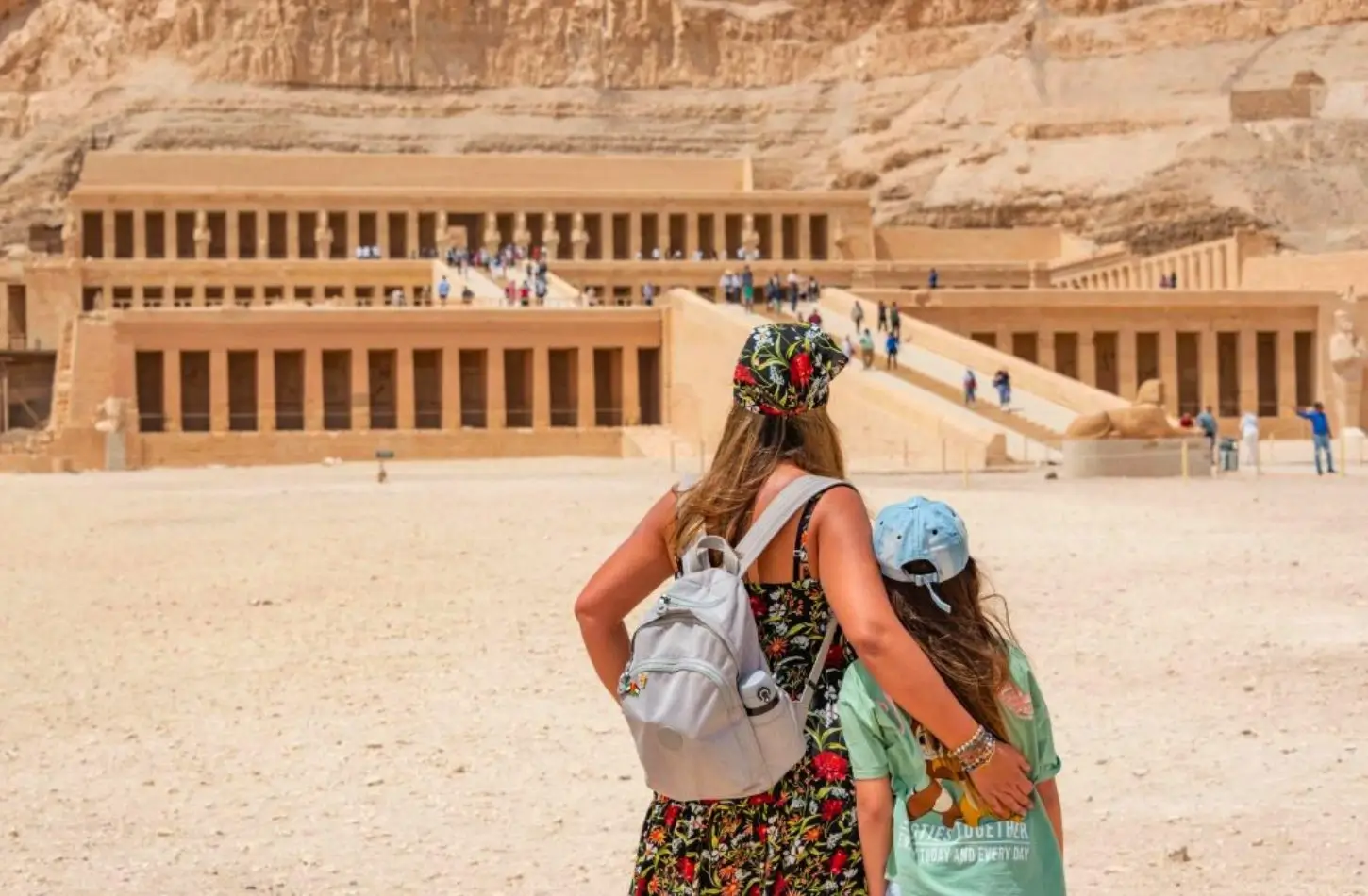
Clothing: Lightweight, breathable fabrics are essential — linen and cotton work best in Egypt's dry heat. Pack loose-fitting trousers and tops that cover your shoulders and knees, as modesty is expected at temples, mosques, and in city streets. A light jacket or cardigan is useful for air-conditioned coaches, Nile cruise interiors, and cooler desert evenings (October–March). Swimwear is perfectly appropriate at Red Sea resorts and on Nile cruise pool decks.
Sun protection: Egypt's sun is intense year-round. Bring high-SPF sunscreen (50+ recommended) and reapply frequently, a wide-brim hat, UV-protective sunglasses, and lip balm. A reusable water bottle is also essential — dehydration can catch you off guard in the desert climate. Drink water consistently throughout the day.
Footwear: Comfortable, closed-toe walking shoes with good grip are a must for uneven temple floors and sandy terrain. Sandals or flip-flops are useful for resort areas and cruise decks.
Practical essentials: A scarf or light shawl (useful for women when entering mosques), a small day-bag for site visits, hand sanitiser, any prescription medications in their original packaging, and a universal power adapter (Egypt uses Type C and F sockets).
Cash: Carry small Egyptian Pound (EGP) notes for tips (baksheesh is culturally expected and warmly appreciated), local market purchases, and street food. Credit cards are accepted at hotels and major shops, but cash is king in local areas.
Documents: Carry a photocopy of your passport and visa (separate from the originals) and keep your travel insurance details accessible.
Is Egypt safe for solo female travelers?
Yes — Egypt is safe for solo female travelers, and many thousands of women travel there alone every year and return with deeply positive experiences. Violent incidents against foreign women are very rare, and Egypt's major tourist destinations are well-policed with a strong tourism security presence at all key sites.
The most effective step solo female travelers can take is to book a reputable, licensed tour operator. Having a certified local guide by your side — as on every Misk Tours itinerary — removes exposure to unwanted attention almost entirely, while giving you expert historical insight at every site. Our team includes female Egyptologist guides available on request.
Practical tips for women traveling to Egypt:
Dress modestly in cities, at temples, and at mosques — loose clothing covering shoulders and knees is both respectful and greatly reduces unwanted attention in public spaces.
At Red Sea resorts like Hurghada and Sharm El Sheikh, and on Nile cruise decks, swimwear is completely normal and accepted.
Use Uber or Careem rather than hailing random taxis — app-based transport is trackable, fare-transparent, and significantly safer.
Avoid walking alone at night in unfamiliar areas of cities. Stick to well-lit, tourist-frequented streets or travel with your guide.
Trust your instincts — the same common sense you apply anywhere in the world applies here too.
Consider wearing a simple ring if you prefer to avoid questions about your relationship status, as this is commonly understood in Egyptian culture.