By the Misk Tours Team | Egypt-based travel specialists | Last verified: Aug 2026
If you’re searching for Egypt travel safety tips before you book, you’re already doing the smart thing. Egypt welcomed over 18 million visitors in 2025, and the vast majority came home with nothing worse than a sunburn and a phone full of pyramid photos. Still, any new destination deserves real preparation, not just reassurance.
This guide gathers the Egypt travel safety tips our own licensed Egyptologist guides give first-time travelers, covering scams, transport, food, health, women’s safety, Nile cruises, and the cultural rules that keep a trip smooth from touchdown to takeoff. If you want the broader yes-or-no answer first, our guide on whether it is safe to travel to Egypt lays out the country-by-country advisory picture in more depth. This article goes further, turning that reassurance into a practical, checklist-style set of tips you can use in the field.
Is Egypt Safe? Quick Context
Before the detailed Egypt travel safety tips, a short answer: yes, Egypt’s major tourist circuits — Cairo, Giza, Luxor, Aswan, Hurghada, and Sharm El Sheikh — are considered safe for travelers, with tourism police stationed at nearly every major site and hotel. The US State Department rates these areas Level 1–2, with advisories concentrated on remote border regions far from any standard itinerary.
That said, “safe” doesn’t mean “risk-free,” and that’s exactly where good Egypt travel safety tips earn their keep — they help you avoid the small, avoidable hassles (scams, overcharging, stomach trouble) that shape how a trip actually feels day to day. For the full advisory breakdown, city-by-city detail, and the latest embassy alerts, read our complete guide to is it safe to travel to Egypt.
Common Egypt Travel Scams to Avoid
Scam-avoidance is the single most requested category of Egypt travel safety tips, and for good reason — scams here are rarely dangerous, but they’re persistent and specifically designed to catch first-time visitors off guard.
The “closed” museum or temple scam. A friendly stranger tells you the site you’re heading to is “closed today for a holiday” and offers to take you to their uncle’s shop or a “better” alternative site instead. It’s never true. Politely ignore it and keep walking — sites in Egypt are rarely closed without advance notice, and legitimate closures are posted at the gate, not announced by strangers on the street.
Unsolicited “guide” offers. Someone attaches themselves to you near a monument, narrates a few facts, then demands payment. If you want a guide, book one through a licensed operator in advance — our own Egyptologist guides carry official syndicate cards and are never approached this way.
Photo and camel-ride traps. A vendor hands you a baby camel or puts a scarf on your head “for a free photo,” then demands a large tip once the picture is taken. This is most common around the Pyramids of Giza, where touts cluster near the entrance gates. Keep your hands to yourself around unsolicited animals and props, and agree on a price before anything touches you.
Papyrus and perfume shop detours. Taxi and calèche drivers sometimes take a “shortcut” through a relative’s shop. You’re not obligated to buy anything, and a firm “no, thank you, straight to the hotel please” ends it quickly.
Taxi overcharging. This is the most common complaint we hear, and it’s the easiest of all Egypt travel safety tips to act on: always agree on a fare before the car moves, or better yet, use a metered app.
Money & Transport Safety Tips
Transport is where most of the day-to-day Egypt travel safety tips actually get used. Use Uber or Careem rather than hailing taxis on the street — both apps are widely available in Cairo, Alexandria, Luxor, Aswan, Hurghada, and Sharm El Sheikh, and they solve the overcharging problem automatically because the fare is fixed before you get in. Fares are shown upfront, trips are trackable, and drivers are rated, which adds a real layer of accountability that street taxis simply don’t have.
If you do need a street taxi or a calèche, agree on the price in Egyptian pounds before getting in, and carry small bills — drivers “not having change” is a common soft-scam. Withdraw cash from ATMs attached to bank branches or hotels rather than free-standing street machines, and cover the keypad when entering your PIN. Notify your bank of your travel dates before you leave.
For inter-city travel, licensed tour operators and private drivers are the safest option, particularly after dark. Overnight trains and long-distance buses are generally fine on major routes but book through a reputable company rather than an unmarked local operator.
If you’re on a guided tour, your driver and vehicle are already vetted, which removes most of the transport-related guesswork entirely — one more reason a structured itinerary, like the ones on our Cairo tours packages, tends to minimize the number of on-the-fly decisions you have to make.
Food & Water Safety Tips
Stomach trouble, not crime, is the most common thing that derails an Egypt trip, so food and water deserve real attention among your Egypt travel safety tips. Drink only bottled or filtered water, and check that the seal is intact before you open it — refilled bottles are a known scam in some tourist-heavy areas. Avoid ice in drinks unless you’re at a reputable hotel or restaurant that explicitly uses filtered water for ice production, and skip brushing your teeth with tap water if you’re prone to sensitive digestion.
Street food is one of Egypt’s great pleasures, and most travelers eat it without issue, but a few precautions help: choose stalls with high turnover and a visible queue of locals, favor food that’s cooked to order in front of you over food that’s been sitting out, and ease into it gradually rather than sampling everything on day one. Peel your own fruit when possible, and be cautious with raw salads and garnishes washed in tap water at lower-end establishments.
If you do experience travel diarrhea — sometimes nicknamed “Pharaoh’s Revenge” — stay hydrated with electrolyte solutions, avoid dairy and heavy foods for a day, and pack a basic anti-diarrheal and rehydration salts before you travel. Most cases resolve within 24 to 48 hours. Persistent symptoms, fever, or blood should prompt a visit to a pharmacy or hotel doctor, both of which are readily available in every major tourist city.
Health & Medical Safety Tips
Health preparation is one of the easiest Egypt travel safety wins — no vaccinations are legally required for most travelers, but a few precautions ahead of time cover most of the remaining risk:
- Confirm routine vaccines, plus Hepatitis A and Typhoid, six to eight weeks before departure
- Drink water constantly in summer heat; wear a wide-brimmed hat and high-SPF sunscreen
- Get travel insurance with medical evacuation coverage ($55–$165/week from insurers like World Nomads or Allianz)
- Confirm your policy covers diving, camel trekking, or hot-air ballooning if you plan to do any of them
- Pack a small first-aid kit: rehydration salts, an anti-diarrheal, and prescriptions in original packaging
- Watch for heat-exhaustion signs — dizziness, nausea, confusion — and respond by moving to shade and hydrating immediately
- Pharmacies are widely available in every major city if you need over-the-counter treatment while traveling
Safety Tips for Women Traveling in Egypt
Thousands of women travel through Egypt safely every year with a bit of preparation, and gender-specific Egypt travel safety questions are some of the most common we get. Our solo female travel in Egypt guide covers this in full depth; the essentials are:
- Dress modestly — shoulders and knees covered — in cities, temples, and mosques (swimwear is fine at resorts and on cruise decks)
- Book a licensed operator with a certified guide rather than exploring entirely independently
- Use Cairo Metro’s women-only carriages when navigating the city on your own
- Avoid walking alone at night; use app-based transport after dark rather than hailing a car on the street
- Respond to unwanted comments with a firm, brief “no” and keep walking
- Ask about female Egyptologist guides on request if that would make you more comfortable
Nile Cruise & Red Sea Safety Tips
Nile cruises and Red Sea diving are among Egypt’s best experiences, and this is one of the most overlooked categories of Egypt travel safety. The US State Department has previously flagged unlicensed boats and scuba operators, so the key is choosing licensed operators like those built into our Egypt Classic Tours and luxury Nile cruises:
- Choose vessels with current Egyptian Tourism Authority licensing and visible life-safety equipment
- Confirm a safety briefing runs before departure, not just before mealtime
- For diving or snorkeling, verify PADI (or equivalent) certification and a full equipment check
- Treat an unusually low price as a warning sign, not a bargain — it often means cut corners on maintenance or crew training
- Multi-night cruises on established Luxor–Aswan routes are inspected on a fixed schedule, unlike same-day dockside bookings
Cultural & Legal Safety Tips
Respecting local customs isn’t just polite — in a few specific cases, it’s the difference between a great trip and a legal problem:
- Avoid photographing military sites, bridges, government buildings, and some airports
- Keep public affection to hand-holding; more can draw unwanted attention outside tourist areas
- Alcohol is legal in licensed hotels and resorts, not on the street — public intoxication is taken seriously
- Avoid social media posts that could read as critical of the government, military, or religion
- Dress modestly at mosques (shoulders and knees covered) and ask before photographing local people
What to Pack for a Safer Trip
A short packing list solves most small problems before they happen:
- Lightweight scarf and modest layers for mosque and temple visits
- Portable phone charger and a local eSIM for staying reachable and using ride-hailing apps
- A photo of your passport’s information page and visa, stored separately from the originals
- Small Egyptian pound cash for tips and moments when card machines are down
- Your tour operator’s emergency contact and your insurance policy number saved offline
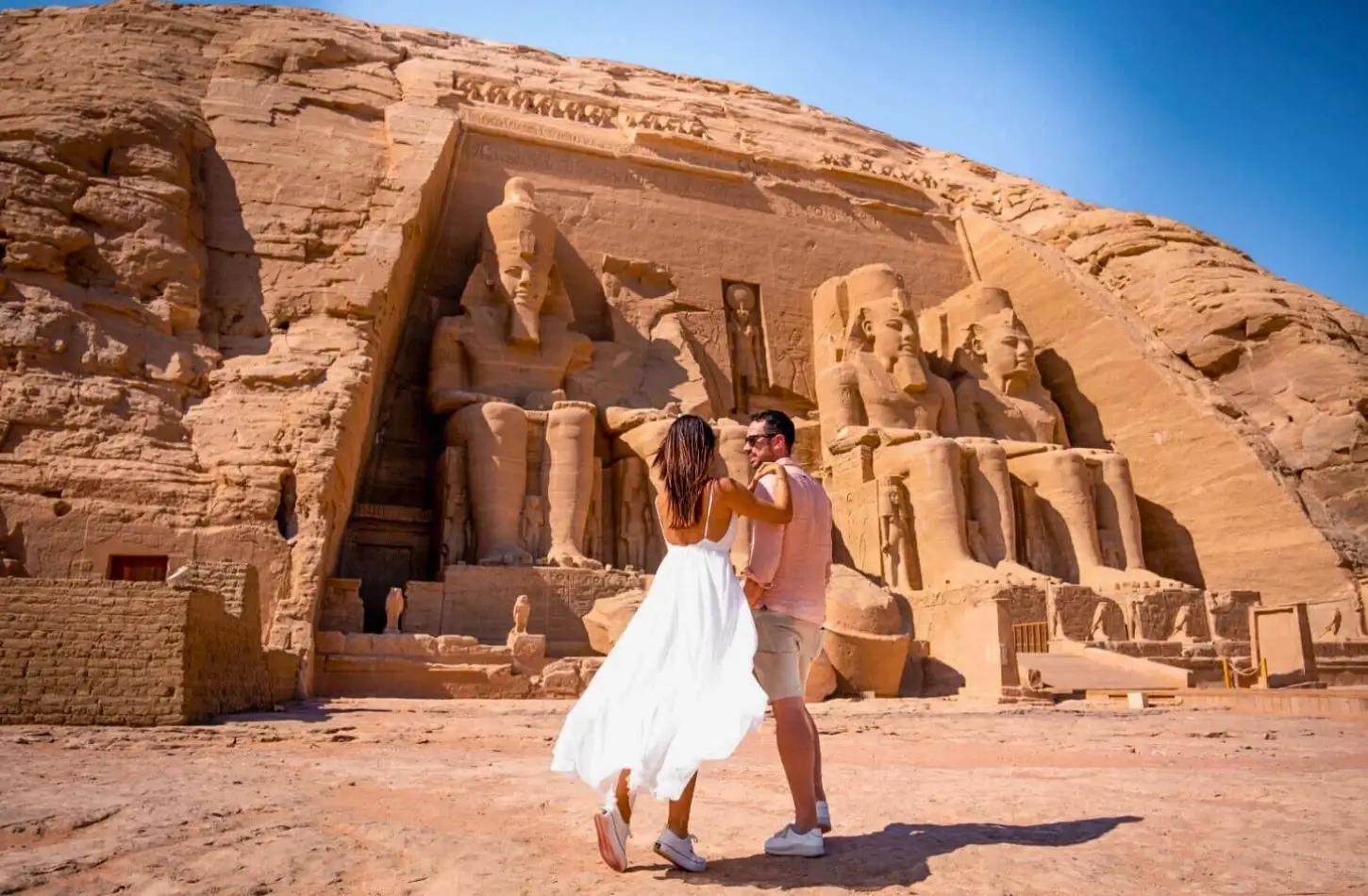
Region-by-Region Safety Snapshot
Different parts of Egypt have slightly different practical considerations. Here’s a quick-reference table covering the areas most tourists visit:
| Region | Safety Notes |
| Cairo & Giza | Heavy tourism police presence at all major sites; standard big-city awareness applies in busy markets like Khan el-Khalili |
| Luxor | Very tourist-oriented; licensed guides recommended for Valley of the Kings and East/West Bank sites |
| Aswan | Relaxed pace, strong tourism infrastructure; standard precautions around isolated areas at night apply |
| Red Sea (Hurghada & Sharm) | Resort-based tourism with strong security; verify licensing for any independent boat or dive excursion |
| Western Desert | Remote; always travel with a licensed desert-safari operator rather than independently |
Your Egypt Travel Safety Checklist
Use this as a fast pre-trip and in-trip reference — a condensed version of every Egypt travel safety tips category covered above:
- Agree on taxi fares before the car moves, or use Uber/Careem instead
- Drink only sealed bottled water; skip ice at lower-end establishments
- Book Nile cruises and Red Sea dive trips only through licensed operators
- Carry a light scarf for mosque visits and dress modestly at religious sites
- Withdraw cash from bank-attached ATMs, not free-standing street machines
- Get travel insurance with medical evacuation coverage before you fly
- Confirm routine vaccines, plus Hepatitis A and Typhoid, six to eight weeks out
- Avoid walking alone at night outside well-lit, tourist-frequented streets
- Use Cairo Metro’s women-only carriages if navigating independently
- Book a licensed, certified guide rather than accepting unsolicited offers at sites
- Avoid photographing military sites, bridges, and government buildings
- Keep a printed or photographed copy of your passport and visa separate from the originals
- Check a menu’s prices before ordering at restaurants near major tourist sites
- Pack DEET repellent and an antihistamine for evening mosquito exposure near the Nile
frequently asked questions
Is Egypt safe for tourists in 2026?
Yes. Egypt’s major tourist areas — Cairo, Luxor, Aswan, Hurghada, and Sharm El Sheikh — see millions of visitors a year with strong tourism-police presence. Following practical Egypt travel safety tips around transport, scams, and health reduces the small risks that do exist.
What is the biggest safety risk for tourists in Egypt?
Scams and stomach illness from food or water are far more common than crime. Agreeing on taxi fares upfront and drinking only sealed bottled water address the two most frequent issues travelers actually run into.
Do I need travel insurance for Egypt?
It’s strongly recommended, particularly if you plan to dive, cruise, or take a desert safari. Policies with medical evacuation coverage typically cost $55 to $165 per week and cover activities that standard health insurance usually excludes.
Is it safe for solo female travelers to visit Egypt?
Yes, with preparation. Modest dress, licensed guides, app-based transport, and avoiding solo walks at night after dark are the core Egypt travel safety tips solo women should follow when traveling in Egypt.
Are Nile cruises safe?
Yes, when booked through licensed operators with current safety inspections and a pre-departure safety briefing. Verify licensing rather than booking the cheapest same-day option dockside.
What should I do if I lose my passport in Egypt?
Report it to the nearest tourist police station and your embassy or consulate immediately. Having a photo or photocopy of your passport’s information page — part of good Egypt travel safety planning — makes replacement significantly faster.
Your Egyptian Adventure Starts Here
Discover ancient wonders, cruise the Nile, explore vibrant bazaars, and create memories that last a lifetime. Let our travel experts help you design the perfect Egypt itinerary.