Last verified: August 2026
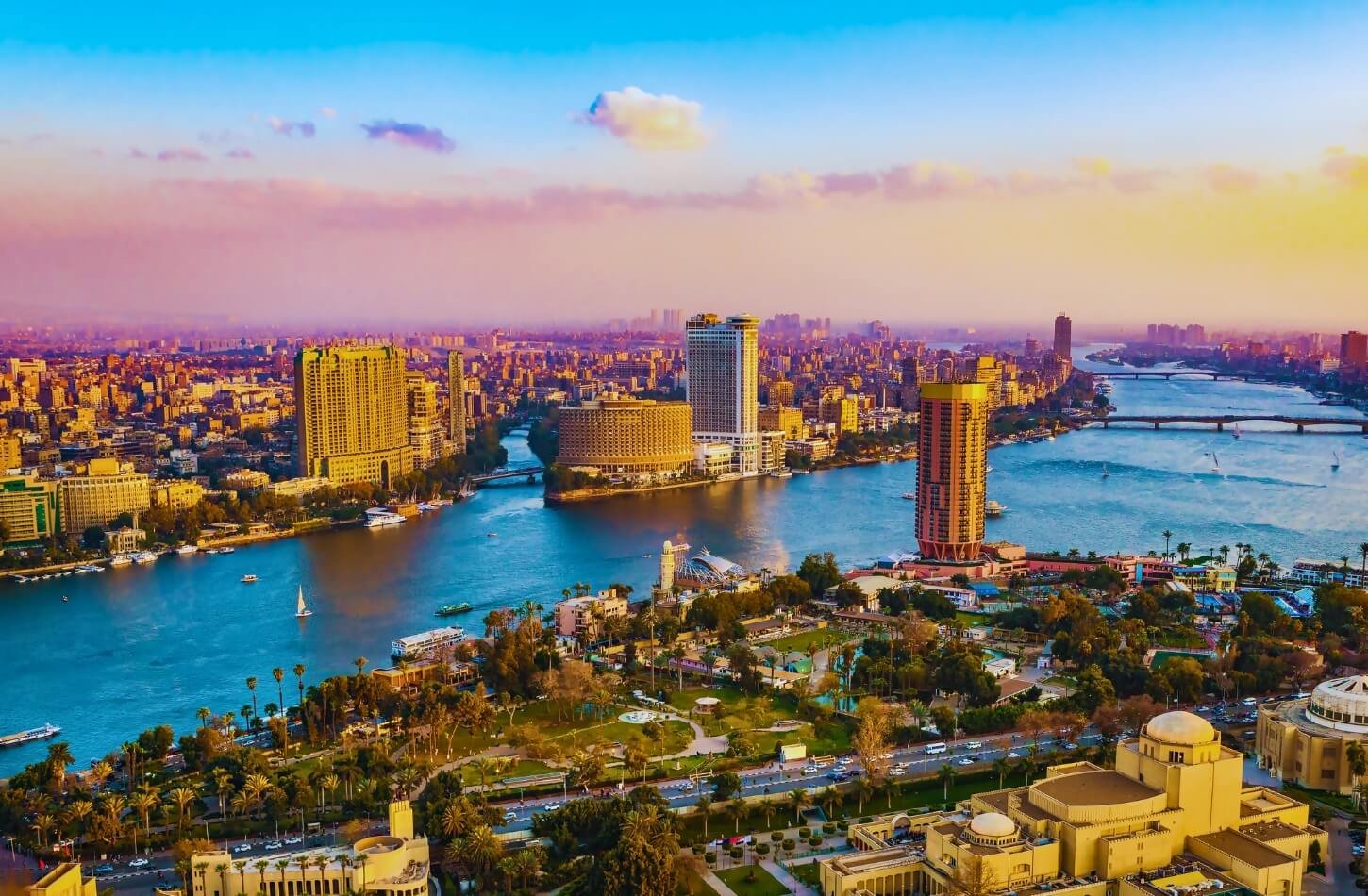
Cairo is Egypt’s sprawling, 20-million-person capital — and the near-mandatory first stop for anyone visiting the country, since the Pyramids of Giza and the new Grand Egyptian Museum both sit on its edge.
This Cairo Travel Guide covers how many days you need, where to stay, what it costs, and how to plan a route that doesn’t waste your time in traffic. As Cairo’s #1-rated tour operator on TripAdvisor, our team built our Cairo tour packages around exactly the itinerary logic below.
How Long Should You Spend in Cairo?
Three days is the minimum useful visit to Cairo — enough to cover the Pyramids of Giza, the Grand Egyptian Museum, and a walk through Islamic Cairo. But if you want to feel the city rather than simply check off its monuments, five days gives you the space to do it properly.
Here’s how most travellers structure their time:
- 3 days: Pyramids & Sphinx, Grand Egyptian Museum, Islamic Cairo & Khan el-Khalili
- 4 days: Add a Nile felucca at sunset, Coptic Cairo, and a proper souk session
- 5 days: Add a day trip to Saqqara and Dahshur, plus time to wander Zamalek
- 7+ days: Extend into Alexandria or add a domestic flight to Luxor
If you’re combining Cairo with the rest of Egypt — Luxor, Aswan, or the Red Sea — a three-night Cairo base works well. For a standalone Cairo trip, four to five nights is the sweet spot.
Rated #1 of 2,500+ tours and activities in Cairo on TripAdvisor, the Misk Tours team can help you build a Cairo itinerary that fits your schedule exactly — whether you have three days or ten.
Cairo: A City of History and Culture
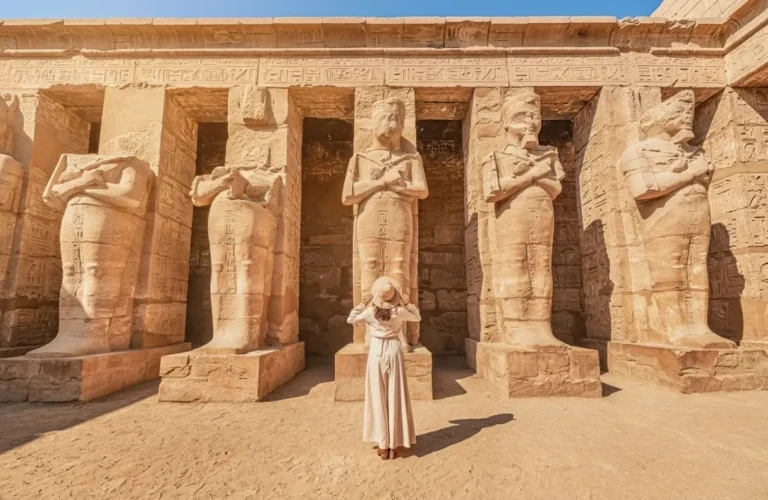
This Cairo travel guide starts here: Cairo isn’t one city layered on ancient ruins — it’s four cities stacked on top of each other, and you can still walk through all of them in a single day. Pharaonic Cairo sits at the edge of town, at Giza and Saqqara. Medieval Islamic Cairo, one of the best-preserved old cities in the Middle East, is still centered on the 11th-century gate of Bab Zuweila and the mosque-lined length of Al-Muizz Street.
Coptic Cairo, the city’s Christian quarter, dates back nearly 2,000 years to the Roman fortress of Babylon. And Downtown Cairo — the part most visitors don’t expect — is a genuine Belle Époque district, laid out in the 1860s by a khedive who wanted Cairo to look like Paris, and it largely still does, in faded, atmospheric form.
What makes Cairo work as a destination isn’t picking one of these — it’s that Giza, Islamic Cairo, Coptic Cairo, and Downtown are all within a 30-minute drive of each other. Few cities let you go from a 4,500-year-old pyramid to a 700-year-old mosque to a 19th-century café in the same afternoon.
Must-Visit Historical Sites
Cairo, Egypt’s capital, is full of history and culture. You can see ancient pyramids and historic mosques. Here are some top sites to visit.
The Pyramids of Giza
Visiting the Pyramids of Giza is a must in Cairo. They are one of the Seven Wonders of the Ancient World. It’s a key attraction for anyone going to Cairo.
The Grand Egyptian Museum
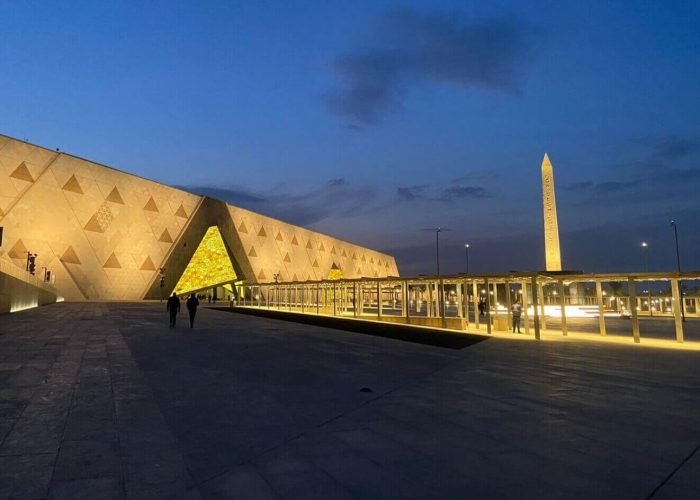
The Grand Egyptian Museum (GEM) is the largest archaeological museum in the world and the most important new cultural landmark in Egypt’s modern history. Opened in phases between 2023 and 2024, it sits on the Giza Plateau just 2 km from the Pyramids — making it the natural companion visit.
The museum’s centrepiece is the complete Tutankhamun collection: all 5,000+ artefacts from the boy-pharaoh’s tomb, displayed together for the first time since Howard Carter discovered them in 1922. Beyond Tutankhamun, the GEM houses over 100,000 objects spanning 3,000 years of Egyptian civilisation — from prehistoric flints to Roman-era portraits.
Key things to know before you go:
- Allow 3–4 hours minimum for a meaningful visit; a full day for dedicated history lovers
- Entry is separate from the Pyramids complex — book tickets in advance to avoid queues
- The Grand Staircase, lined with 87 royal statues, is one of the most photographed spaces in Egypt
- A private guided tour makes a significant difference here — the scale is overwhelming without context
For a half-day guided experience combining the GEM’s highlights with an expert Egyptologist, see our Grand Egyptian Museum tour from Cairo.
Other Historical Sites
Cairo also has many other historical sites. You can see the Mosque of Muhammad Ali, the Al-Azhar Mosque, and the Grand Egyptian Museum. Each site shows a different part of Cairo’s history and culture.
When you visit, look at the amazing architecture and details. Cairo’s historical sites are great for history lovers, culture fans, or curious travelers. They will surely make a big impression.
Best Cairo Itinerary: 3 to 5 Days
Most travellers arrive in Cairo with a list of monuments and not much of a plan — this Cairo travel guide itinerary is built around how the city actually works: grouping sites geographically, avoiding the worst of the midday heat, and leaving room for the unscripted moments that make Cairo unforgettable.
Day 1: Giza Plateau & the Grand Egyptian Museum
Start early — by 8 am if you can manage it. The Pyramids of Giza are at their most atmospheric in the morning light, and the coach groups don’t arrive until mid-morning. Spend two to three hours on the plateau: the Great Pyramid, the Sphinx, and the panoramic viewpoint from the south. Then head directly to the Grand Egyptian Museum (a 10-minute drive) for the afternoon. The Tutankhamun galleries alone justify a two-hour stay.
Day 2: Islamic Cairo, Al-Azhar & Khan el-Khalili
This is the day that surprises most visitors. Islamic Cairo is one of the most intact medieval urban landscapes in the world — a dense warren of mosques, madrasas, and merchant streets that has barely changed in 700 years. Start at the Citadel and the Mosque of Muhammad Ali for the views over the city. Walk down through Al-Muizz Street to Al-Azhar Mosque, then lose an hour or two in Khan el-Khalili market. Arrive at the market after 4 pm when it’s lively but before the evening crush.
Day 3: Coptic Cairo & the Nile
Old Cairo (Masr el-Qadima) is the city’s quietest and most layered quarter. The Hanging Church, the Ben Ezra Synagogue, and the ancient Roman fortress of Babylon sit within a few hundred metres of each other in a neighbourhood that has been continuously inhabited for 2,000 years. In the evening, take a felucca from the Corniche — a slow Nile sail at dusk, with the city skyline fading behind you, is one of the best things Cairo offers for under 20 USD.
Days 4–5: Day Trips — Saqqara, Dahshur & Memphis
If your schedule allows, Saqqara and Dahshur are well worth a half-day from Cairo. Saqqara is home to the Step Pyramid — the world’s oldest monumental stone structure — and the spectacular painted tombs of the Old Kingdom nobles. Dahshur holds the Bent Pyramid and the Red Pyramid, which you can actually enter. The whole circuit, including ancient Memphis, takes around 5–6 hours and is best done with a private guide
Local Cuisine: A Taste of Cairo
Start with koshari — Egypt’s national dish, a bowl of rice, lentils, macaroni, and chickpeas under a spiced tomato sauce and crisp fried onions. The place everyone agrees on is Abou Tarek in Downtown, a four-story koshari institution running since the 1950s that serves nothing else and still draws a lunchtime queue.
For a cleaner, air-conditioned take on Egyptian street food, Zööba (branches in Zamalek, Maadi, and City Stars) does excellent koshari, ta’ameya (Egyptian falafel, made with fava beans rather than chickpeas), and feteer.
For a sit-down meal, Felfela near Talaat Harb Square has been serving traditional Egyptian dishes since 1959 in a quirky, mosaic-tiled dining room, while Aboul Sid offers a more polished version of the same home-style cooking — molokhia, stuffed pigeon, and grilled meats — in a Zamalek townhouse setting.
A few things worth knowing before you eat: tap water isn’t recommended, but bottled water is everywhere and cheap; Ramadan changes restaurant hours significantly (many close during the day and stay open late); and karkadeh (hibiscus tea, served hot or cold) and Egyptian mint tea are the two drinks you’ll be offered constantly — both are worth saying yes to.
Navigating the City: Transportation Tips
Exploring Cairo’s busy streets can be tough — this Cairo travel guide covers the right tips so you’re ready for your adventure. The city has three main ways to get around: taxis, the metro, and ride-hailing services.
Taxis and Ride-hailing Services
Taxis are easy to find in the city. You can flag one down on the street or book ahead. Ride-hailing services are great for busy times or when traffic is bad. Always talk about the price before you go to avoid any mix-ups.
Metro Lines
The metro is a smart way to move around Cairo. The lines connect well, and stations are easy to find. You can buy a token or a card to make traveling simpler.
Tips for Navigating Cairo
Here are some tips to enjoy Cairo more:
- Be ready for crazy traffic and plan your day wisely.
- Choose safe taxi services or ride-hailing apps for a good trip.
- Keep up with local events or road closures that might change your plans.
Getting From Cairo Airport to the City Center
Cairo International Airport sits about 22 km (14 miles) from Downtown, and the drive takes anywhere from 30 minutes late at night to over an hour during rush hour (7–9 am and 4–7 pm). How you make that first trip sets the tone for the rest of your visit, so it’s worth knowing your options before you land.
Uber or Careem. The easiest and most transparent option. Fares run roughly 150–300 EGP to Downtown or Zamalek, with the price locked in before you book. Pickup is at the designated rideshare point on the departures level — not right outside arrivals — so follow the in-app directions rather than the drivers calling out “taxi” as you exit customs.
Official airport taxis. Available at marked stands inside the arrivals hall, typically 200–450 EGP to central Cairo. Agree the fare with the driver before you get in; meters are frequently “not working” for tourists, and negotiating from a stopped position is always easier than mid-journey.
Private transfer. A pre-arranged driver meets you at the gate with a name board, tracks your flight for delays, and takes the guesswork out of the trip entirely — worth the small premium after a long-haul flight or a late arrival. It’s the option we build into most of our custom Cairo itineraries.
Whichever option this Cairo travel guide points you toward, keep a note of your hotel’s Arabic name and address — drivers navigate by landmark far more reliably than by GPS pin.
Exploring Cairo’s Neighborhoods
Cairo is a city that mixes history, culture, and modern life. Its neighborhoods show its rich past.
Downtown Cairo buzzes with life. It has historic sites and fancy shopping areas. You can see the Egyptian Museum, visit old mosques, and try local food.
Islamic Cairo is full of mosques and madrasas. It’s a key place for those who love history and architecture. Whether you’re into history, buildings, or local culture, Cairo has it all.
Discover the timeless wonders of Cairo with our exclusive Cairo Tours, designed to bring you closer to the heart of Egypt’s rich history and vibrant culture.
Where to Stay in Cairo: Best Neighbourhoods for Tourists
Cairo is a city of 20 million people spread across a vast metropolitan area. Where you base yourself has a significant impact on how you experience the city — your commute to the Pyramids, the quality of your evenings, and the texture of daily life around you.
Downtown Cairo (Wust el-Balad)
Downtown is the most central base for first-time visitors. You’re walking distance from Tahrir Square, the Egyptian Museum, and the metro lines that connect the rest of the city. The area is dense, lively, and relatively affordable. It’s not the quietest neighbourhood, but it’s the most useful for seeing a lot in a short time.
Zamalek
Zamalek occupies a leafy island in the Nile and is the neighbourhood of choice for travellers who want a slower pace alongside easy city access. It has Cairo’s best independent cafés, a strong arts scene, and a noticeably more relaxed atmosphere than the mainland. A slightly longer taxi or Uber ride to Giza, but worth it if you’re staying four or more nights.
Giza (Pyramids Area)
Staying in Giza puts you within minutes of the plateau — ideal if you want to visit the Pyramids at sunrise or are on a tight itinerary. The trade-off is that you’re further from central Cairo attractions like Islamic Cairo and the Egyptian Museum. A good option for one or two nights, especially as a final base before flying home.
New Cairo & Sheikh Zayed
Cairo’s newer satellite cities are home to the city’s best international hotels and serviced apartments. The distances from major tourist sites are considerable — factor in 45–60 minutes to Giza in traffic — but if comfort and space matter more than proximity, these areas deliver.
Wherever this Cairo travel guide leads you to stay, Uber and Careem are the most reliable ways to get around the city. Agree on a destination via the app rather than flagging roadside taxis, particularly for airport transfers.

Cultural Etiquette and Customs
When you visit Cairo, remember to respect the local culture and customs. Egypt is a conservative country. Visitors should dress modestly and honor local traditions.
To have a great trip, here are some tips:
- Dress modestly, covering your shoulders and knees.
- Remove your shoes before entering mosques or homes.
- Be respectful of local customs and traditions.
By following these tips, you’ll enjoy Cairo more.
Is Cairo Safe for Tourists?
This Cairo travel guide can say plainly: Cairo is generally safe for tourists, and has been receiving international visitors at scale for over a century. The main attractions, including Giza, Islamic Cairo, and Downtown, are staffed by a dedicated Tourist Police force, and Egypt’s tourism sector is closely protected as a major part of the national economy.
That said, Cairo is a major metropolis of 20 million people, and the same common-sense rules that apply in any large city apply here. A few practical points:
Getting Around Safely
Use Uber or Careem for all transport rather than unmarked roadside taxis. Both apps show fixed fares, driver ratings, and trip tracking — significantly reducing the chance of overcharging or routing confusion. The Cairo metro is also safe, fast, and efficient; women-only carriages operate at the front of each train.
At the Markets & Attractions
Khan el-Khalili and the Pyramids area attract significant tourist traffic, which in turn attracts persistent sellers and guides. A polite but firm ‘La shukran’ (no thank you) is usually sufficient. If you’ve booked a licensed guide or tour, your guide will handle deflection for you. Petty theft is rare but possible in crowds — keep bags zipped and avoid displaying expensive equipment unnecessarily.
For Solo Female Travellers
Many women travel solo in Cairo and have excellent experiences. Dressing modestly — covering shoulders and knees — significantly reduces unwanted attention, particularly near religious sites. Having a pre-arranged guide or tour for the first couple of days gives you your bearings and removes the friction of navigating alone. See our dedicated guide to solo female travel in Egypt for detailed, current advice.
How Much Does Cairo Cost? A Realistic Daily Budget
This Cairo travel guide wouldn’t be complete without the numbers: Cairo is one of the most affordable major cities in the world for international visitors — particularly for those coming from Western Europe, North America, or Australia. The Egyptian pound exchange rate means your money stretches considerably further here than in most comparable destinations.
Here’s a realistic breakdown of daily costs by travel style:
| Category | Budget | Mid-Range | Comfortable |
|---|---|---|---|
| Accommodation (per night) | Starts at $15 | Starts at $40 | Starts at $100 |
| Meals (per day) | Starts at $5 | Starts at $15 | Starts at $30 |
| Transport (Uber/metro) | Starts at $3 | Starts at $8 | Starts at$15 |
| Attraction entry fees | Starts at $5 | Starts at $15 | Starts at $30 |
| Guided tours | — | Starts at $30 | Starts at $80 |
| Daily total (approx.) | Starts at $28 | Starts at $78 | Starts at $175 |
The main cost variables in Cairo are accommodation and whether you use private guided tours. The attraction fees themselves are relatively modest — a combined ticket for the Giza Pyramids complex runs around $25–35 USD for international visitors, and the Grand Egyptian Museum is comparable. Costs add up quickly in tipping culture: guides, drivers, restroom attendants, and security personnel all expect small gratuities, so carry plenty of small-denomination Egyptian pounds.
If you’re traveling on a tighter budget, Cairo Street food is outstanding — koshari (rice, lentils, and spiced tomato sauce) from a local shop will cost you under a dollar, and the quality at neighborhood restaurants is often better than at tourist-facing spots.
Nightlife in Cairo: Where to Go
This Cairo travel guide wouldn’t be complete without Cairo’s lively nightlife — its many bars, clubs, and restaurants. It’s a key attraction in its own right, and you won’t want to miss it.
Cairo’s night scene is a blend of old and new fun. You can see live music, watch belly dance, or enjoy a drink at a rooftop bar. Cairo has something for every kind of night out.
For a special night, try a Nile River cruise. These cruises offer dinner and shows. They give a unique view of Cairo’s sights while you enjoy the evening.
Looking for a place to stay near the nightlife? Cairo has many options. You can choose from fancy hotels to more affordable places. They’re all close to bars and clubs.
Some top spots for nightlife are Downtown Cairo, Zamalek, and Garden City. Each area has its own vibe. You’ll find everything from fancy cocktail bars to fun dance clubs.
Shopping in Cairo: From Souks to Malls
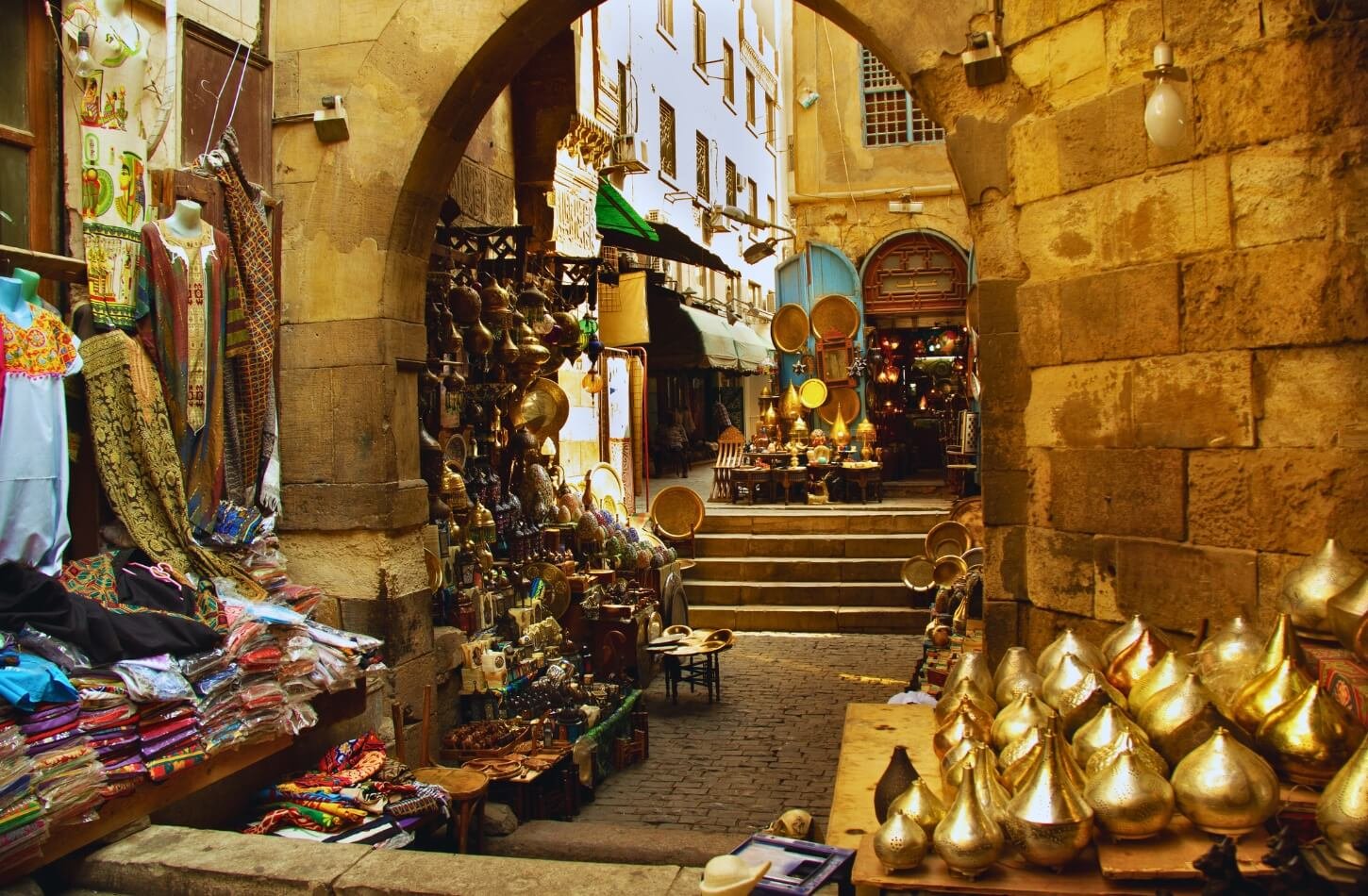
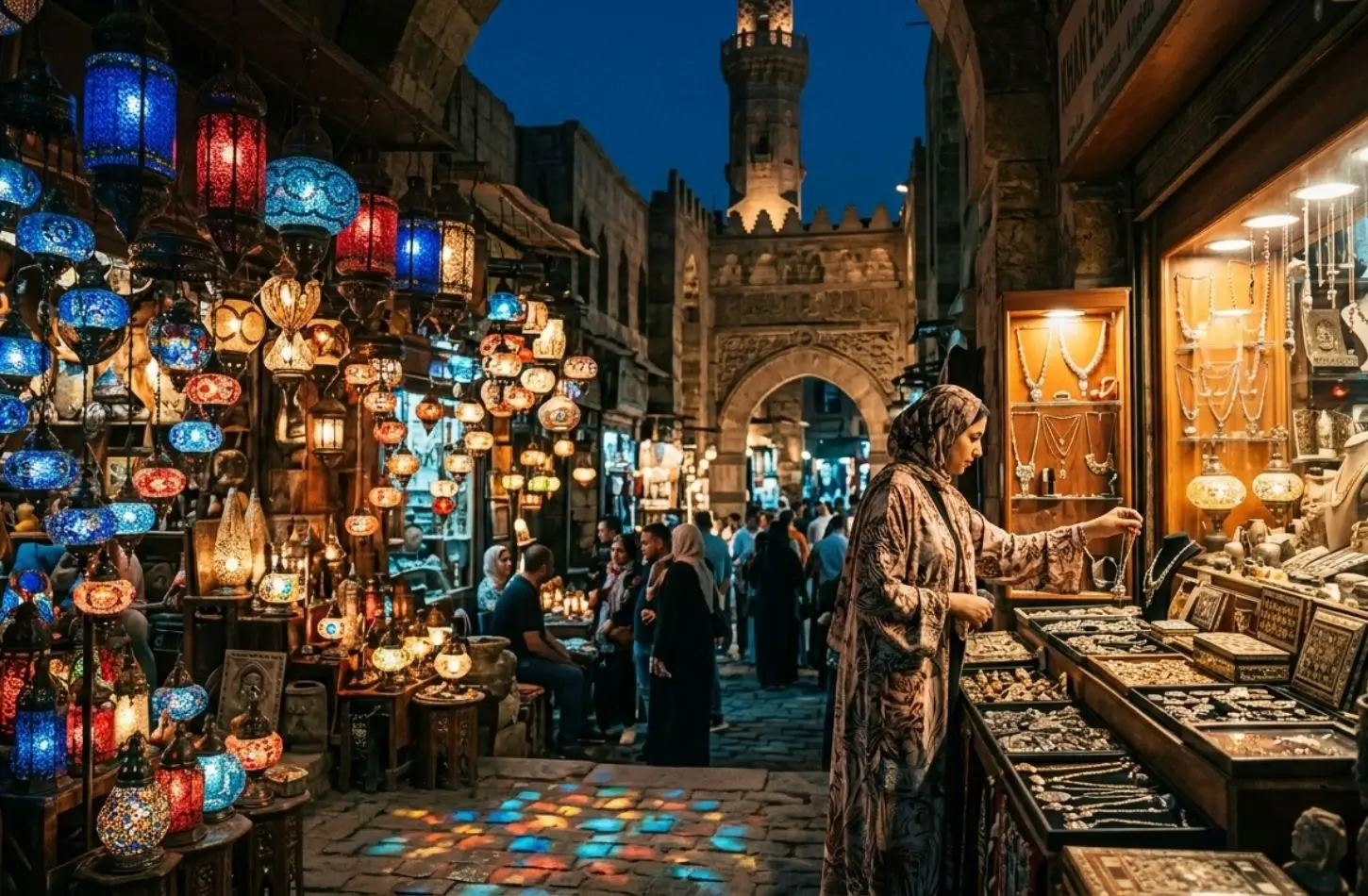
Khan el-Khalili is still the main event — a 14th-century bazaar in Islamic Cairo where spices, cartouche jewelry, brass lanterns, and hand-blown perfume bottles are sold from the same stalls families have run for generations.
Haggling is expected and part of the experience; start at roughly half the first price quoted and settle somewhere in the middle. One thing to watch for: papyrus sold cheaply on the street is almost always banana-leaf, not real papyrus — buy from a shop with a demonstration room if authenticity matters to you.
For a modern contrast, Cairo has genuinely large Western-style malls: Cairo Festival City in New Cairo and Mall of Egypt in Sheikh Zayed both have full international brand lineups, cinemas, and food courts, while City Stars in Heliopolis is one of the biggest malls in the Middle East and a destination in its own right.
Cash is still king in the souks — cards are rarely accepted at individual stalls — while the malls take cards everywhere. If you’re short on Egyptian pounds, there are ATMs at both Khan el-Khalili’s main entrance and inside every major mall.
Day Trips: Expanding Your Cairo Experience
See more of Egypt by leaving Cairo behind. The Pyramids of Saqqara are a top choice for day trips.
The Saqqara necropolis is where you’ll find the Step Pyramid. It was built by Imhotep, a genius architect. Here, you can dive into ancient Egypt’s past.
Tips for Your Day Trip
Think about the season and how far you’ll travel. Also, check when places open and how much they cost.
Cairo is a perfect spot to start exploring Egypt. A day trip can uncover many wonders.
Do You Need a Visa to Visit Cairo?
Most international visitors need a tourist visa to enter Egypt. The good news: the process is straightforward and can be handled either before you leave home or on arrival at Cairo International Airport.
Egypt E-Visa (Apply Before You Travel)
Citizens of over 70 countries — including the UK, US, EU member states, Australia, Canada, and Singapore — can apply for an Egyptian e-visa online at visa2egypt.gov.eg before departure. Processing typically takes 3–7 business days. The e-visa is available as a single-entry (valid 30 days) or multiple-entry option. Applying in advance means you skip the bank kiosk queue at the airport.
Visa on Arrival
If you haven’t applied for an e-visa in advance, most nationalities can obtain a visa on arrival at Cairo, Luxor, or Aswan airports. Before reaching passport control, look for the bank kiosks inside the arrival hall — you purchase a visa sticker there, then present it at immigration. The fee is approximately $25 USD for a single-entry visa, payable in USD, GBP, or EUR. Keep the change you receive — it’s usually in Egyptian pounds and useful for tipping.
Important Notes
- Your passport must be valid for at least 6 months from your date of entry
- Tourist visas allow a stay of up to 30 days from arrival
- Carry a printed copy of your hotel booking — immigration occasionally requests it
- Visa requirements can change; always verify current rules at your government’s travel advisory before booking
Cairo Travel Guide — Frequently Asked Questions
How many days do you need in Cairo?
Most visitors need 3 to 5 days to cover Cairo’s highlights comfortably. Three days is enough for the Pyramids of Giza, the Grand Egyptian Museum, and Islamic Cairo. Allow 4–5 days if you want to explore Khan el-Khalili, take a Nile felucca, and add a day trip to Saqqara or Dahshur.
Is Cairo safe for tourists?
Cairo is generally safe for tourists. Major sites like Giza, Islamic Cairo, and Zamalek are well-policed, and Egypt maintains a dedicated Tourist Police force. As with any major city, take normal precautions: use Uber or Careem instead of unmarked taxis, keep valuables close in crowded markets, and dress modestly near religious sites.
What is the best time to visit Cairo?
The best times to visit Cairo are March to May and September to November, when temperatures are comfortable, crowds are thinner, and hotel rates are lower. Winter (December–February) is the most popular season due to cool weather, but expect more tourists. Summer brings the best hotel deals, but the heat can be intense.
How do you get from Cairo Airport to the city center?
Cairo International Airport is about 22 km (14 miles) from Downtown — expect 30–60 minutes depending on traffic. Uber and Careem are the easiest options, running roughly 150–300 EGP with upfront pricing (pickup is at the designated rideshare point, a short walk from arrivals). Official airport taxis are available at the arrivals hall stands for around 200–450 EGP, but agree on fare before you get in. For a hassle-free start, a pre-booked private transfer meets you at the gate and costs a bit more but removes the guesswork entirely.
Do you need cash in Cairo, or are cards accepted?
Carry cash for day-to-day spending — most street vendors, small restaurants, and market stalls in Khan el-Khalili are cash-only, and tipping (baksheesh) is a constant, small-denomination expectation throughout the day. Hotels, larger restaurants, and malls generally accept major cards. ATMs are widely available and the easiest way to withdraw Egyptian pounds; just notify your bank before you travel and use ATMs attached to banks rather than standalone street machines where possible.
Is English spoken in Cairo?
Yes — English is widely spoken in hotels, restaurants, tourist sites, and by guides and drivers working in the tourism industry, so getting around as an English speaker is straightforward. Away from tourist areas, especially with older residents or in local markets, English becomes less common, though pointing, numbers, and a few basic Arabic phrases (like “shukran” for thank you) go a long way and are always appreciated.
Do you need a visa to visit Cairo?
Most nationalities can get a visa on arrival at Cairo International Airport for approximately $25 USD (single entry, valid 30 days). Citizens of the US, UK, EU, Australia, and many other countries can also apply for an e-visa before travel at visa2egypt.gov.eg. Check requirements for your specific nationality before booking.
What is Cairo best known for?
Cairo is best known for the Pyramids of Giza — one of the Seven Wonders of the Ancient World — and the Grand Egyptian Museum, home to the world’s largest collection of ancient Egyptian artifacts, including the treasures of Tutankhamun. Beyond the monuments, Cairo is famous for its medieval Islamic architecture, the Khan el-Khalili bazaar, and its position as the Arab world’s largest city.
Conclusion: Making the Most of Your Cairo Adventure
This Cairo travel guide means you’re set for more than just a checklist — you’ll come away with a real feel for the city’s history, culture, and lively street scenes. Use it to find the best spots, try the local food, and enjoy Cairo’s nightlife.
When you visit Cairo, remember to respect local customs, explore beyond one neighborhood, and use local transport to get a real feel for the city. Don’t skip the day trips — Saqqara and Dahshur hold some of Egypt’s best-kept secrets.
With this Cairo travel guide in hand, you’re ready to start planning and make the most of Cairo’s world.