By the Misk Tours Team | Egypt-based travel specialists | Last verified: September 2026
Ancient Egyptian temples are the best-preserved windows into a civilization that shaped religion, art, and architecture for over 3,000 years. From the 134 towering columns of Karnak to the rock-cut giants of Abu Simbel, each one was built to connect a pharaoh with the gods — and today they’re among the most visited monuments on Earth. This guide ranks the 10 ancient Egyptian temples worth building a trip around, with the practical details most guides skip.
Most of these temples cluster along the Nile between Luxor and Aswan, which is exactly why our Egypt Tour Packages and Egypt Nile Cruises are built around this route — you can visit six or more of the temples below without changing hotels. Planning a wider trip that also covers Cairo? Start with our Egypt travel tips.
Egypt’s 10 Greatest Temples at a Glance
| Temple | Location | Dedicated To | Best For |
|---|---|---|---|
| Karnak | Luxor, East Bank | Amun-Ra | Scale — largest temple complex ever built |
| Luxor Temple | Luxor, East Bank | Royal cult (Amun) | Night visits, walkable from town |
| Hatshepsut | Luxor, West Bank | Amun / Hatshepsut | Architecture — cliff-built terraces |
| Philae | Aswan (island) | Isis | Scenery — boat-only access |
| Abu Simbel | Aswan, 3 hrs south | Ramesses II | The solar alignment event, statues |
| Edfu | Between Luxor & Aswan | Horus | Best-preserved Ptolemaic temple |
| Kom Ombo | Between Edfu & Aswan | Sobek & Horus | Unique double-temple design |
| Dendera | Near Qena | Hathor | Best-preserved ceiling astronomy |
| Seti I (Abydos) | Abydos, north of Luxor | Osiris | The Abydos King List, fewer crowds |
| Medinet Habu | Luxor, West Bank | Amun / Ramesses III | Least-visited major mortuary temple |
How to “Read” an Egyptian Temple
Almost every pharaonic temple on this list follows the same basic blueprint, once you know what to look for: a pylon (the massive sloped gateway) leads into an open courtyard, which leads into a columned hypostyle hall, which leads to a dark, small sanctuary where only priests and the pharaoh could enter. The deeper you go, the more sacred — and the darker and smaller — the space becomes. Once you recognize this pattern at Karnak, you’ll spot it again instantly at Edfu, Kom Ombo, and Dendera.
Ancient Egyptian Temples: The Great Temple of Karnak
Exploring the Karnak temple complex, you’ll see its grand beauty. The Hypostyle Hall stands out, with 134 columns reaching for the sky.
There are many temples and shrines to see. Each one has its own story and importance. The Great Temple of Karnak is a place you can’t miss.
The Temple of Luxor
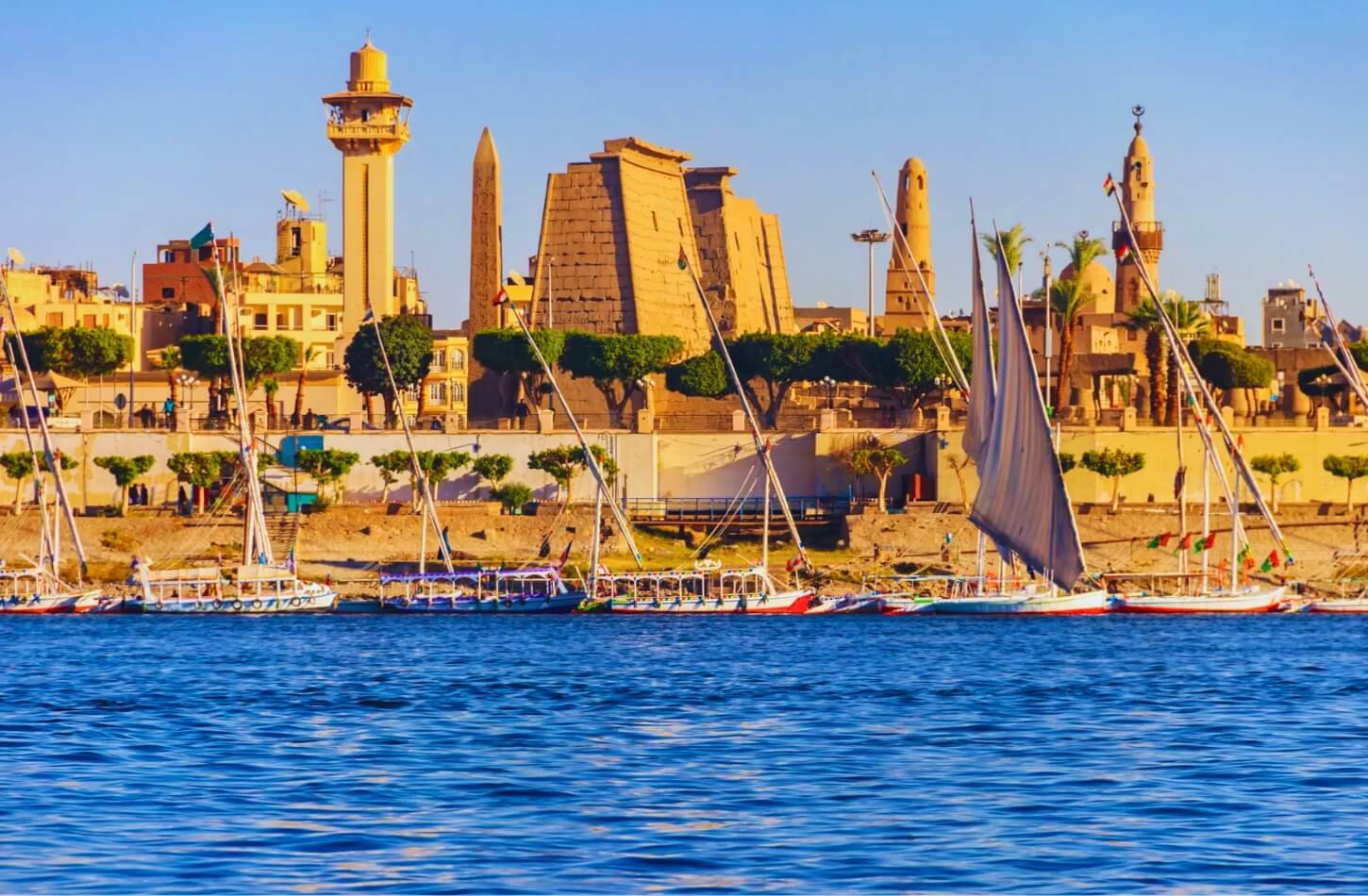
The Temple of Luxor, located near the Great Temple of Karnak, is a key site for anyone exploring ancient Egyptian history. Unlike many temples dedicated to a single deity, the Temple of Luxor honors divine royal power, reflecting the might and influence of Egypt’s pharaohs.
As you walk through its grand gateway, guarded by statues of Ramesses II, you’ll be surrounded by towering columns topped with lotus flowers, creating an unforgettable atmosphere. Travelers who join a Luxor day tour can fully appreciate the temple’s historical significance while exploring its serene courtyards and intricate carvings. Many visitors also include it in Luxor tour packages, which often combine the temple with other nearby attractions, ensuring a complete and memorable experience of Luxor’s ancient wonders.
The Temple of Luxor is truly one of the top temples in Egypt, offering a peaceful setting filled with history and breathtaking architecture—a must-see for anyone fascinated by the legacy of ancient Egypt.
Ancient Egyptian Temples: The Temple of Hatshepsut
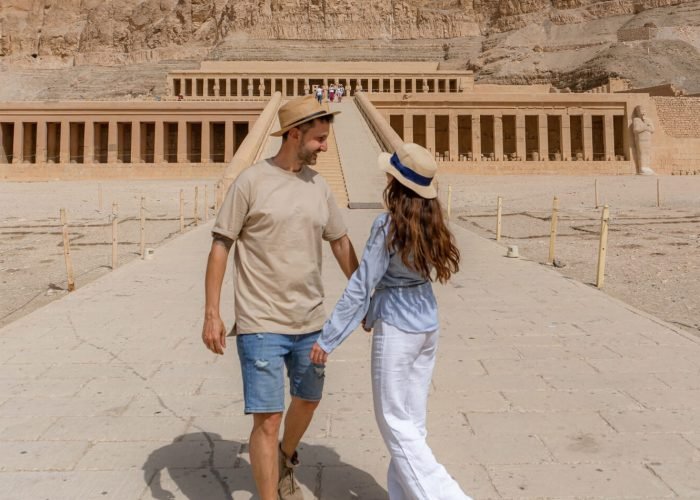
The Temple of Hatshepsut in Luxor is on the west bank of the Nile. It’s a stunning example of ancient Egyptian architecture. This temple, built into Deir el-Bahari’s cliffs, shows Egypt’s grandeur under its famous female pharaoh.
The temple’s design is special. It has three grand terraces that rise from the valley floor. This creates a striking visual effect. Exploring the temple, you’ll see it’s not just about Hatshepsut’s reign. It’s also an architectural wonder that has lasted through time.
Visiting the Temple of Hatshepsut is a historical journey. The temple was built to show Hatshepsut’s divine right to rule Egypt. It’s a fascinating site for those interested in temple tours in Egypt.
The Temple of Hatshepsut is one of Egypt’s famous Ancient Egyptian temples. It gives a peek into Egypt’s rich history and architecture. Its natural and man-made beauty makes it a top spot for travelers and historians.
The Temple of Philae
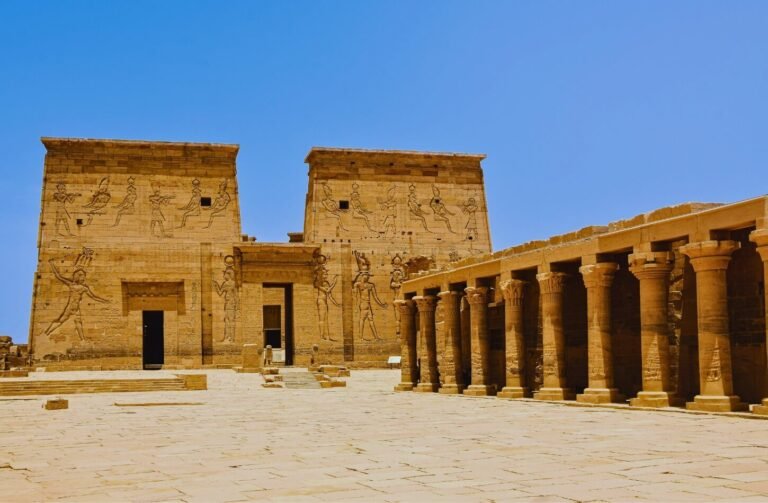
The Temple of Philae is one of Egypt’s most popular attractions, drawing visitors from around the world. Located on an island in the Nile near Aswan, this stunning temple complex is dedicated to the goddess Isis and showcases beautiful ancient Egyptian architecture and intricate carvings.
Many travelers include it in their itinerary through Aswan tours, which provide an organized and insightful way to explore the temple and learn about its fascinating history. Whether you arrive by boat or enjoy a guided tour on the island, the Temple of Philae offers a memorable experience that combines history, culture, and the scenic beauty of the Nile.
This temple was built during the Ptolemaic period. It’s famous for its stunning architecture and history. In the 1960s, it was moved to save it from the Aswan High Dam.
Walking through the temple, you’ll see its beauty. The walls are covered in intricate hieroglyphics. It shows the rich culture and history of ancient Egypt.
Seeing the Temple of Philae at night is unforgettable. The Nile’s view and the temple’s history make it a top spot in Aswan.
Ancient Egyptian Temples: Exploring the Temple of Philae
The Temple of Philae has amazing features. Its well-preserved architecture and colorful carvings stand out. The design shows the ancient Egyptians’ engineering skills.
The Abu Simbel Temples
You won’t want to miss the Abu Simbel Temples. There are two massive rock-cut temples in Egypt. Built by Ramses II, they show the ancient Egyptians’ skill in architecture and engineering.
The Great Temple is dedicated to Ramses II and the gods Amun and Ra. It has four huge statues of Ramses II sitting on a throne. The temple’s facade is impressive, with the statues towering over visitors as they approach.
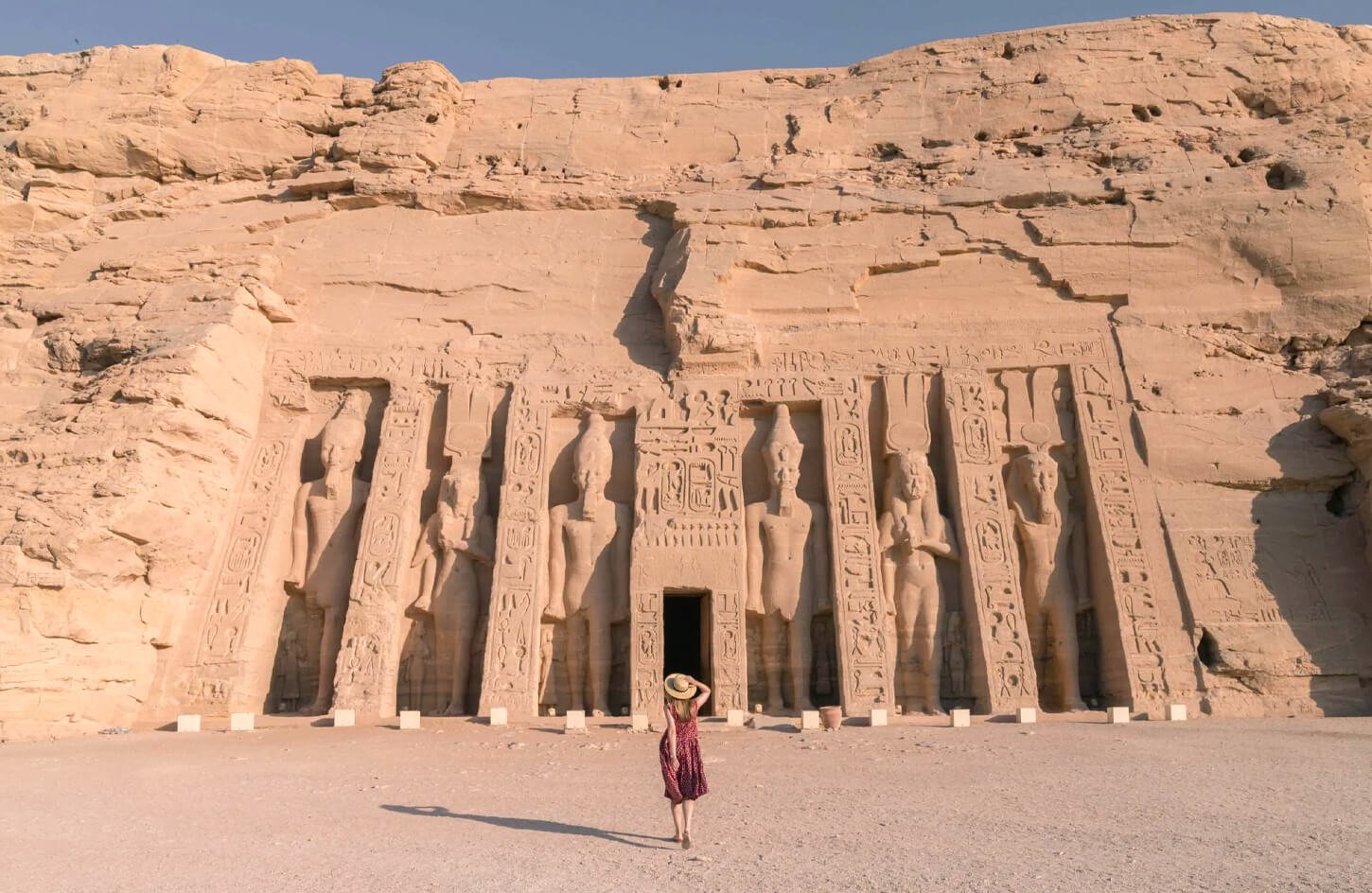
The smaller temple is for Nefertari, Ramses’ wife, and the goddess Hathor. It has six statues at the entrance. Originally carved into a cliff, they were moved in the 1960s to save them from Lake Nasser.
The relocation of the temples was a massive undertaking. They were cut into blocks, moved, and put back together. This saved them for future generations to see.
Now, the Abu Simbel Temples are a key part of any temple tour in Egypt. They draw visitors from all over. Exploring these structures deepens your understanding of ancient Egypt’s history and culture.
The Temple of Edfu
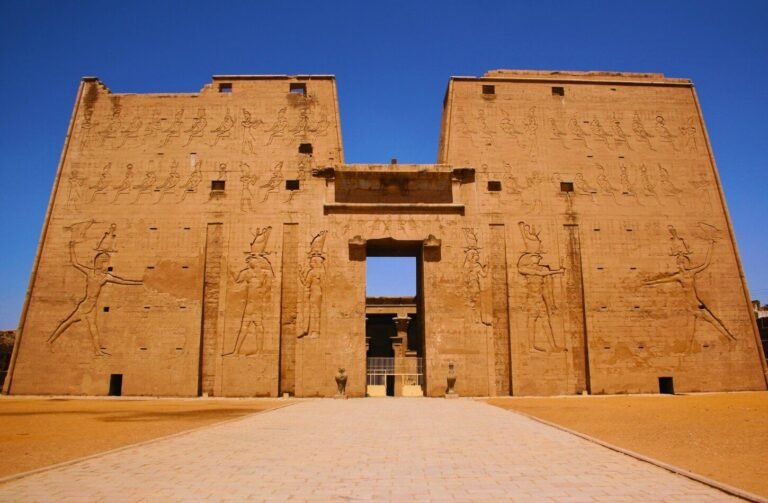
The Temple of Edfu is a key spot in Egypt’s history. It’s dedicated to Horus, the god with a falcon’s head. Built in the Ptolemaic period, it’s one of Egypt’s most well-preserved ancient Egyptian temples.
When you visit, you’ll see its traditional design. It has a pylon, courtyard, and hypostyle hall. These features are common in the historic temples that Egypt boasts, showing the country’s deep culture.
Ancient Egyptian Temples and the Unique Features of Edfu
The temple shows the ancient Egyptians’ engineering skills. Its walls have detailed carvings and hieroglyphics. These tell stories of Horus and other myths.
Seeing the Temple of Edfu is like going back in time. It’s a chance to see the majesty of ancient Egyptian temples. As one of Egypt’s top historic temples, it’s a must-see on any Egypt trip.
The Temple of Kom Ombo
If you’re planning temple tours in Egypt, the Temple of Kom Ombo is a must-see. It’s famous for its historical value and unique double dedication. This temple is a standout among Egypt’s top temples.
Unique Architecture
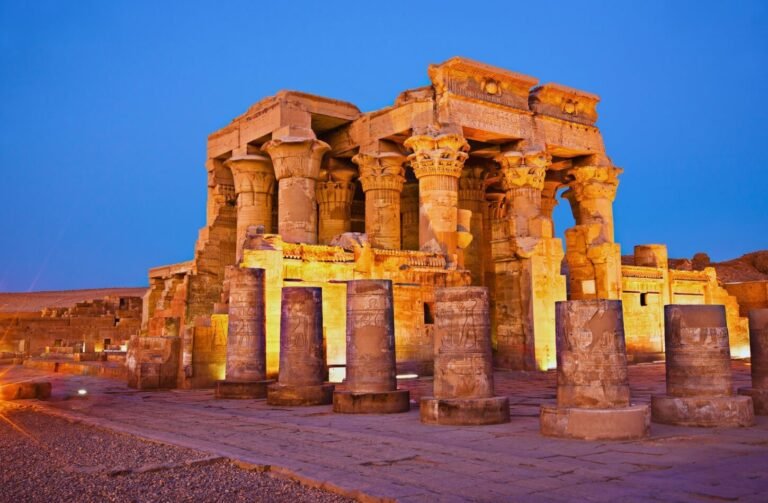
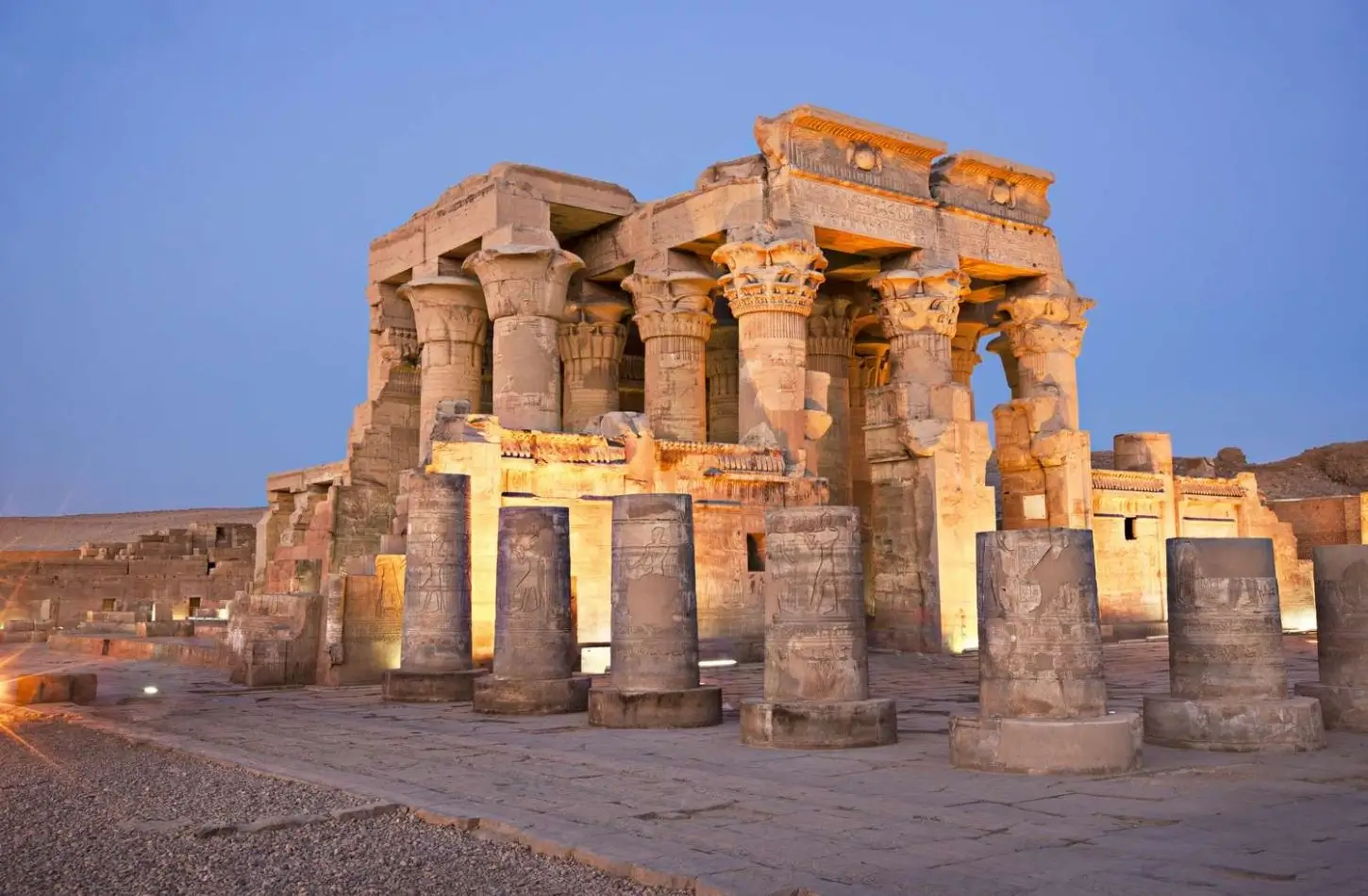
The temple honors two gods: Sobek, the crocodile god, and Horus the Elder. Its design shows this dual dedication. You’ll see two sanctuaries that reveal ancient religious practices.
Walking through the temple, you’ll see amazing carvings and statues. The Temple of Kom Ombo may be small, but it’s full of history. It’s a great place to learn on any temple tour in Egypt.
The temple’s spot on the Nile, between Edfu and Aswan, makes it even more beautiful. It’s a place that visitors will always remember.
The Temple of Dendera
The Temple of Dender is on the Nile River’s west bank. It’s a grand place dedicated to Hathor, the goddess. This temple shows Egypt’s deep history and amazing building skills.
The Temple of Dendera stands out as one of the most well-kept ancient Egyptian temples. It mixes Egyptian and Greco-Roman styles. People can see its detailed carvings and reliefs. These tell us about ancient Egypt’s beliefs and ways of life.
The Temple of Seti I at Abydos
Unlike the other temples on this list, Seti I’s temple isn’t on the Luxor–Aswan route — it’s in Abydos, one of ancient Egypt’s oldest sacred cities, about 3 hours north of Luxor. That distance is exactly why most cruise itineraries skip it and why it’s one of the least crowded major temples in Egypt.
The temple is dedicated to Osiris and built with seven parallel sanctuaries — one for each of seven gods, an unusual layout you won’t see elsewhere. Its most famous feature is the Abydos King List: a carved wall listing 76 pharaohs in chronological order, one of the most important records historians have for reconstructing Egypt’s early dynasties.
Behind the main temple sits the Osireion, a sunken, water-surrounded structure believed to symbolize the primordial mound of creation — atmospheric, half-flooded, and unlike anything else on this list.
7 Things Most Guides Won’t Tell You Before You Go
- Bring small bills for the “guardians.” Off-duty guards at Karnak and Abu Simbel will often offer to unlock a roped-off chamber or take your photo from an unusual angle for a small tip — genuinely worth it, but agree on the amount first.
- Tripods need a permit, phones don’t. If you’re shooting video with a tripod at any major temple, you’ll need a permit purchased on-site — a phone or handheld camera needs nothing extra.
- The light changes the temple. Karnak’s columns glow orange at 6 am; by midday, the same stone looks flat and grey. If you only get one “golden hour” visit, spend it at Karnak, not Luxor Temple.
- Sandals over sneakers at Abu Simbel. The sand between the parking area and the temple gets hot enough to be uncomfortable in closed shoes by 9 am.
- Shoulders and knees covered, even for men. Enforcement is inconsistent but stricter at Abu Simbel and Philae than at Karnak.
- Skip the audio guide at Philae, take a real guide instead. The mythology of Isis and Osiris that the temple depicts isn’t conveyed in any recorded script — it’s worth having someone explain the wall reliefs as you walk.
- The cruise-ship crowds arrive by 10 am, not earlier. If you’re staying in Luxor or Aswan (not on a cruise), you have a real window between opening and 9:30 am at almost every temple on this list.
How to Visit: Hours, Tickets & Best Time of Year
Most temples open around 6 am and close between 4 and 5 pm, with Karnak and Philae sometimes offering an evening sound-and-light show as a separate ticket. Ticket prices are set by Egypt’s Ministry of Tourism and Antiquities and change periodically — book through a licensed operator or check official pricing shortly before you travel rather than relying on older blog posts.
The most comfortable months to visit are October through April, when daytime temperatures in Luxor and Aswan stay below 30°C (86°F). May through September is workable early in the morning but genuinely punishing by midday, especially at Abu Simbel. For a guided route that sequences these temples logically instead of backtracking, see our Luxor tour packages or Aswan tours, or build a custom itinerary around the specific temples on your list.
Frequently Asked Questions for ancient Egyptian temples
What are the most famous ancient Egyptian temples?
Karnak, Abu Simbel, Luxor Temple, and Philae are the most famous ancient Egyptian temples, drawing the largest numbers of visitors each year. Karnak is the largest temple complex ever built; Abu Simbel is famous for its four colossal statues of Ramesses II.
What is the oldest temple in Egypt?
The oldest surviving cult temples date to Egypt’s Old Kingdom, but most temples still standing today — including all 10 on this list — were built or heavily rebuilt during the New Kingdom and Ptolemaic periods (roughly 1550 BC–30 BC), since earlier mudbrick temples rarely survived.
Can you visit Karnak and Abu Simbel in one trip?
Yes — Karnak is in Luxor and Abu Simbel is a 3-hour drive (or short flight) from Aswan, so both fit comfortably into a standard 7-day Cairo–Luxor–Aswan itinerary, typically on separate days.
Which ancient Egyptian temples are in Luxor?
Luxor is home to more major temples than anywhere else in Egypt, including Karnak, Luxor Temple, the Temple of Hatshepsut, and Medinet Habu, all within a short drive of each other on the East and West Banks of the Nile.
Is there a full list of ancient Egyptian temples?
Egyptologists have documented well over 100 temple sites across Egypt, though many survive only as ruins or foundations. This guide focuses on the 10 best-preserved and most visit-worthy temples for travelers, not the full archaeological record.
What’s the difference between a cult temple and a mortuary (pharaonic) temple?
A cult temple, like Karnak or Edfu, was built to worship a specific god. A mortuary or pharaonic temple, like Hatshepsut’s or Medinet Habu, was built to honor a specific pharaoh’s memory and afterlife — the two purposes sometimes overlap in the same building.
Conclusion
Visiting ancient Egyptian temples offers a journey through time, revealing the ingenuity, artistry, and beliefs of a remarkable civilization. Each temple, with its grand architecture, intricate carvings, and historical significance, provides a unique window into the past. Experiencing these sites allows visitors to connect with the stories of ancient kings, gods, and communities, making each visit both educational and inspiring. These timeless monuments remain some of the most captivating and enduring symbols of human creativity and cultural heritage.