Weather in Egypt in January is the coolest and most comfortable of the entire year — daytime highs around 19°C in Cairo and 23–24°C in Luxor and Aswan, virtually no chance of the punishing heat that defines an Egyptian summer, and desert nights cold enough to need a proper jacket. It is also, without question, the busiest and most expensive month to travel here. If you are weighing up when to book Egypt tour packages or a Nile cruise, January sits at the very top of peak season, and this guide breaks down exactly what that means for your itinerary, your budget, and your packing list, region by region.
January in Egypt is not one climate — it is several. The country stretches more than 1,000 kilometers from the Mediterranean coast to the Nubian desert near Sudan, and the gap between a chilly, occasionally rainy Cairo evening and a dry, sun-warmed afternoon in Aswan is wide enough to change how you plan your entire trip. Below is the full regional weather data, followed by what to actually do with it, a look at Coptic Christmas — the standout cultural event of the month — and a full breakdown of what January costs you in crowds and cash compared with the months on either side of it.
January Weather Data — All Regions
| Destination | Avg High | Avg Low | Sea Temp | Rain (mm) | Sun (hrs/day) | UV Index |
| Cairo | 19°C | 9°C | — | 5mm | 6.5 | 4 (moderate) |
| Giza | 19°C | 9°C | — | 5mm | 6.5 | 4 |
| Luxor | 23°C | 7°C | — | 1mm | 8 | 5 (moderate) |
| Aswan | 24°C | 8°C | — | 0mm | 8.5 | 5 |
| Hurghada | 22°C | 13°C | 22°C | 4mm | 7.5 | 5 |
| Sharm El-Sheikh | 22°C | 13°C | 21°C | 4mm | 7.5 | 5 |
| Alexandria | 18°C | 10°C | 18°C | 48mm | 5.5 | 3 (low–moderate) |
Regional Weather Breakdown
Cairo & Giza
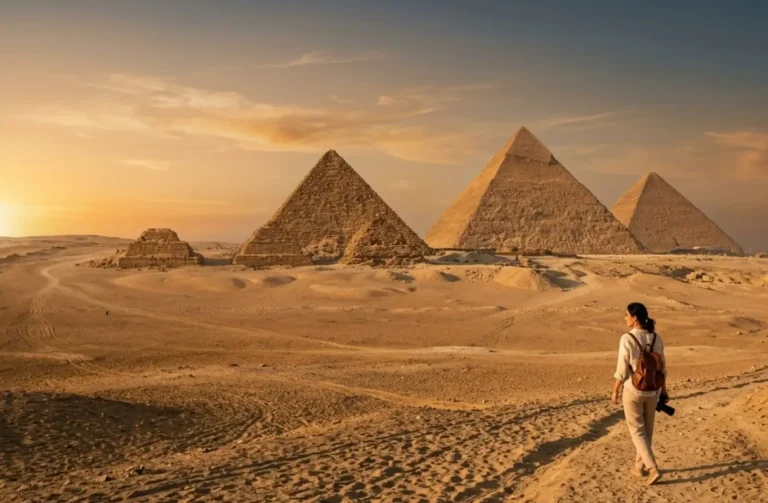
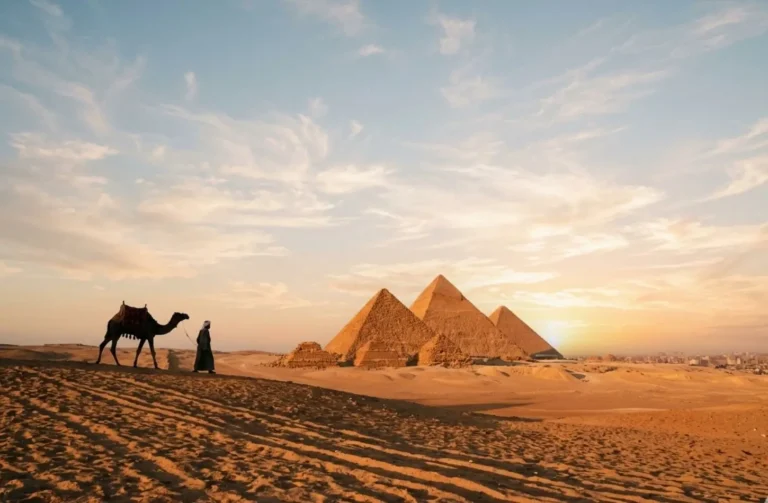
The weather in Cairo, Egypt in January sits at a mild 19°C by day, sliding down to around 9°C once the sun sets — cold enough that a felucca ride after dark genuinely calls for a coat, not just a scarf. Mornings at the Pyramids of Giza can start crisp, sometimes with light haze that burns off by mid-morning, and the plateau is at its most crowded of the year, so arriving right at the 8am opening matters more in January than in almost any other month. Sun hours run around 6.5 a day, the lowest of the year, and January is also Cairo’s rainiest month — though “rainy” in Cairo still only means a handful of overcast days with light showers, not the kind of rain that derails a trip.
Luxor
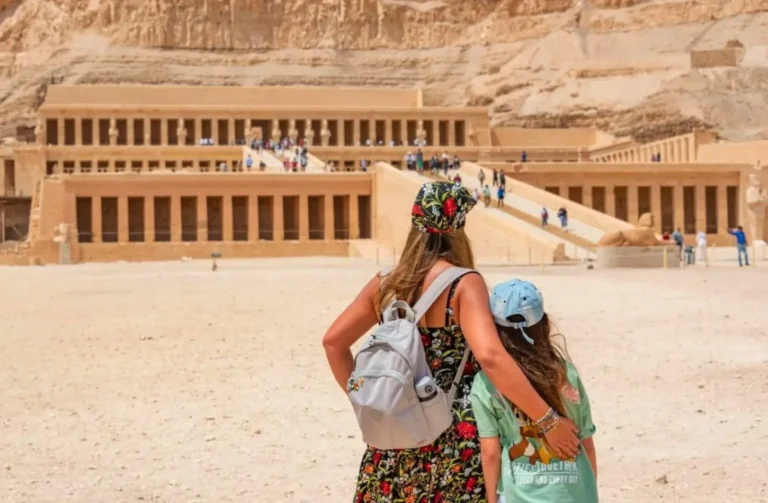
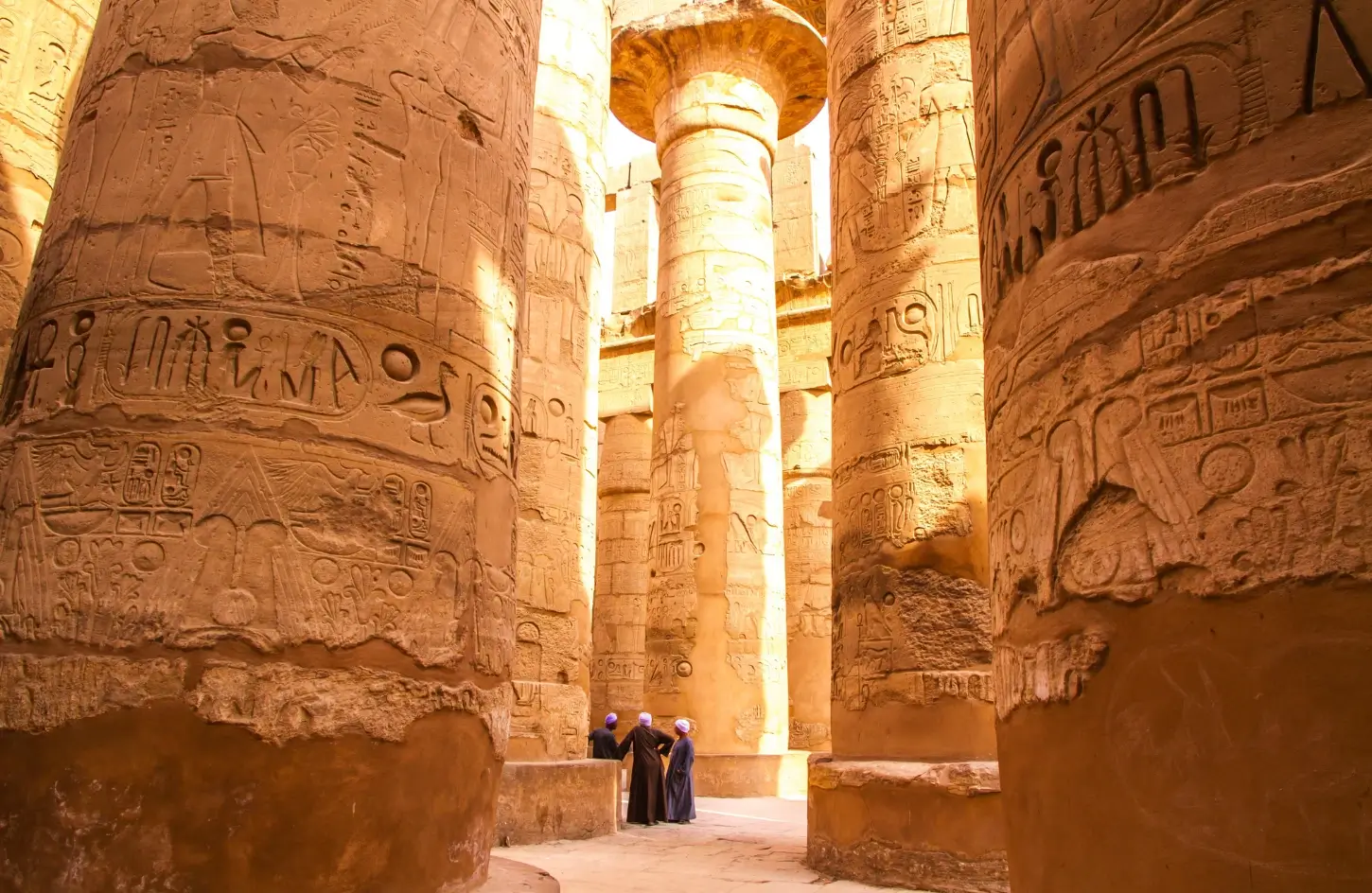
Luxor in January is warm by day at 23°C and genuinely cold at night, with lows dipping to around 7°C — a 16-degree daily swing that catches first-time visitors off guard. Rainfall is almost nonexistent, and with 8 hours of sunshine a day, the temples are lit beautifully for photography without the harsh glare of summer. I’d still plan the big open-air sites — Karnak Temple and the Valley of the Kings — for the late morning through mid-afternoon window, once the morning chill has properly lifted, then save the golden hour for Hatshepsut’s temple or a Nile-side sunset.
Aswan
Aswan is marginally the warmest inland destination in January, with highs around 24°C and the same steep overnight drop to roughly 8°C that defines Upper Egypt this month. The dry desert air makes the daytime warmth feel even more pleasant than the number suggests, and it’s an excellent base for a felucca sail around Elephantine Island or a day trip to Abu Simbel, though early starts mean a genuinely cold pre-dawn departure if you’re chasing the winter sunrise convoy.
Sharm El-Sheikh & Sinai
Sharm El-Sheikh runs a very similar profile to Hurghada in January — 22°C highs, 21°C sea temperature, and light but real rainfall on a handful of days. If you’re pairing a Red Sea stay with a Mount Sinai sunrise hike, be prepared for genuinely freezing conditions at the summit; overnight temperatures on Sinai’s high peaks regularly drop below zero in January, and hikers without proper cold-weather gear are consistently underprepared for it.
Alexandria
Alexandria remains the outlier for Egypt in January, just as it is for most of the winter — the Mediterranean coast is noticeably cooler (18°C) and considerably wetter, with around 48mm of rain across the month, more than any other Egyptian city by a wide margin. It’s still an interesting detour for its Greco-Roman history and seaside corniche, but January is not the month to build a beach day around Alexandria; think coats, not swimsuits.
Coptic Christmas: What Makes January 7 Different
Egypt’s Coptic Orthodox community, one of the world’s oldest Christian groups, celebrates Christmas on January 7 (Julian calendar) rather than December 25.
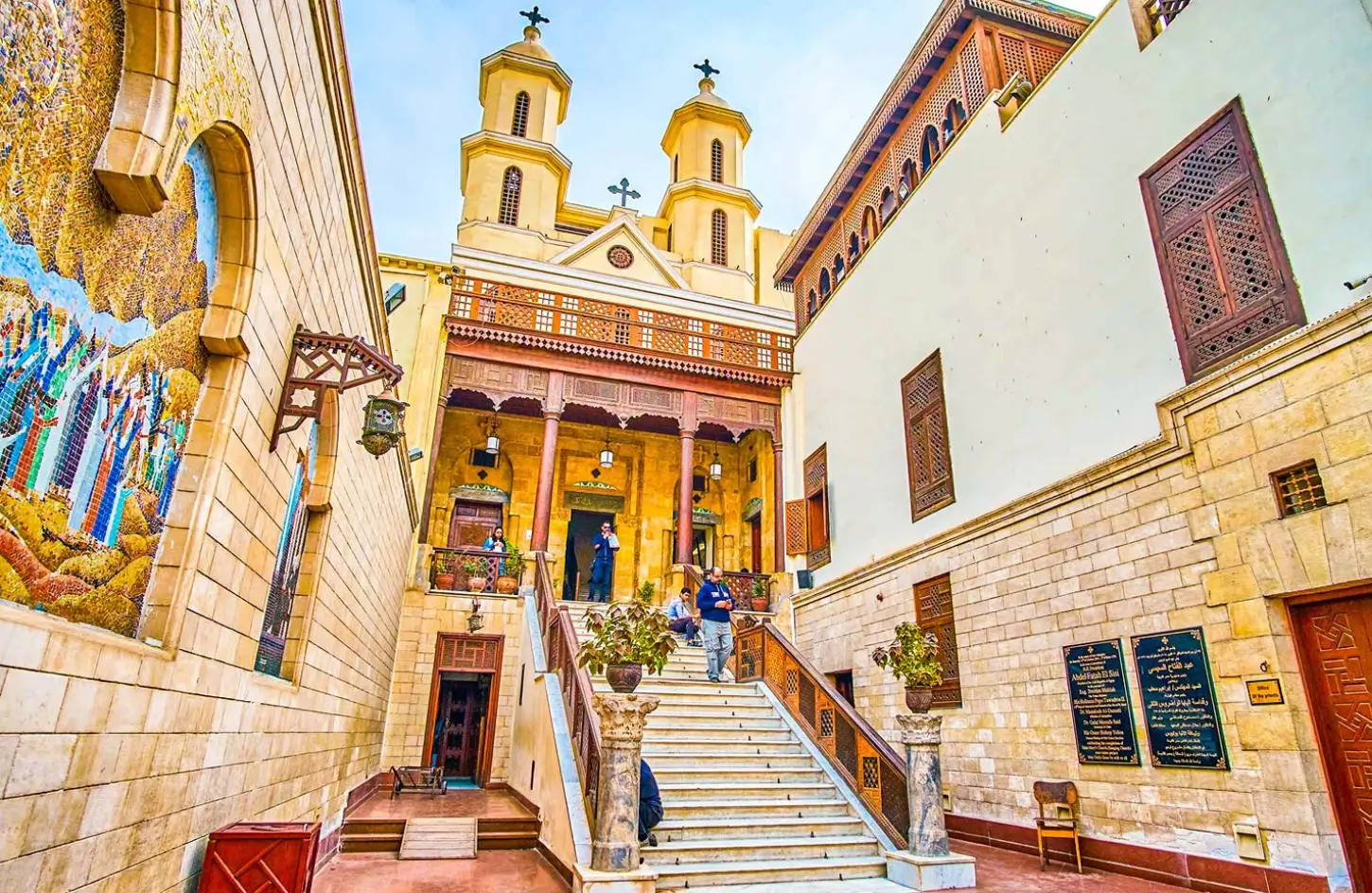
The period begins with a 43-day fast and culminates in a midnight Mass on 6–7 January. In Cairo, especially around the Hanging Church and Saints Sergius and Bacchus Church in Old Cairo (and neighbourhoods such as Shubra), streets and homes are decorated, large crowds gather, and families share festive meals after the fast ends. The atmosphere is warm, joyful, and distinctly local—quite different from the more commercial December celebrations elsewhere.
New Year’s Eve in Egypt: What to Expect
If your trip covers December 31 into January, Egypt is in peak season with a lively festive atmosphere. Major hotels in Cairo, Luxor, Hurghada, and Sharm El-Sheikh (plus Nile cruises) host New Year’s Eve galas with set-menu dinners, live music, and fireworks.
These packages usually require a mandatory (and often expensive) supplement, and the best tables/cabins sell out earliest. Travelling in the first week of January instead gives similar weather and residual festive feel at a lower cost.
For those who want to celebrate the countdown, Cairo’s Nile-front hotels and Sharm El-Sheikh resorts are the most popular bases—book the gala dinner as soon as the hotel is confirmed, as packages often sell out separately from rooms.
Best Things to Do in Egypt in January
Coptic Christmas Eve Mass (January 6–7). Witness one of Egypt’s most authentic cultural events in Cairo’s Old Coptic quarter — arrive a day or two early if this date matters to your trip.
Nile cruising between Luxor and Aswan. January is peak cruise season — cool, comfortable days on deck and genuinely crisp evenings, though boats book out early. A 4-night Nile cruise or a longer luxury Nile cruise route both run at full capacity this month.
New Year’s Eve carryover celebrations. The first days of January still carry the festive energy of New Year, with hotels and Nile cruise boats hosting themed dinners and entertainment well into the first week.
Desert safari season at its best. Daytime temperatures in the Western Desert sit in the comfortable low-to-mid 20s, making the White Desert and Siwa Oasis genuinely enjoyable for camping, stargazing, and sandboarding without summer’s brutal heat.
Diving with a wetsuit. Visibility in the Red Sea stays excellent through winter even as the water cools — a 5mm wetsuit keeps January dives comfortable at Ras Mohammed and around Hurghada’s reefs.
Long, unhurried days in Islamic Cairo. Khan el-Khalili bazaar, the citadel, and the old city’s mosques are genuinely pleasant to explore on foot without the exhausting heat that makes summer walking tours a slog.
Egypt in January Right for Your Trip?
Whether Egypt in January suits you depends mainly on your travel style and budget. The weather is excellent for almost everyone, but crowds and peak pricing are less ideal for some.
History & culture tourists: Highly recommended for the cool, comfortable temperatures ideal for outdoor sites — though expect the year’s heaviest crowds.
Beach & diving tourists: Acceptable but not ideal; sea temps (21–22°C) are the coolest of the year, so a wetsuit is useful and beach time is more limited.
Honeymooners: A festive, comfortable option if you’re fine with premium rates; popular for honeymoon packages.
Families: Generally well-suited thanks to milder daytime temperatures (less risk of overheating kids), though cold desert evenings require warm layers.
Budget travellers: Least favourable month of the year due to high prices; better to choose shoulder seasons instead.
January vs. December vs. February — Honest Comparison
| Factor | December | January | February |
| Cairo avg. high | 20°C | 19°C | 21°C |
| Luxor avg. high | 23°C | 23°C | 25°C |
| Red Sea sea temp | 23°C | 22°C | 22°C |
| Crowd level | Very high | Very high | High |
| Hotel prices | Highest | Highest | High |
| Signature event | Christmas & New Year | Coptic Christmas (Jan 7) | Abu Simbel Sun Festival (Feb 22) |
Nile Cruise Prices in January: What to Expect
A Nile cruise in Egypt in January will cost you more than any other time of year — the combination of ideal weather and peak demand makes it the single most expensive month to book. Exact rates vary by ship category, cabin type, and cruise length, but the general pattern holds consistently across operators:
| Cabin Category | Typical Nightly Range (Jan) | vs. Shoulder Season (Oct/Nov) |
| Standard 5-star | Higher end of standard pricing | +15–25% |
| Deluxe / Balcony | Premium pricing, limited availability | +20–30% |
| Luxury / Suite | Highest of the year, earliest sell-out | +25–35% |
Where to Stay in January: Booking Tips by Region
Accommodation for Egypt in January books up faster than any other month, so where and when you book matters as much as the destination itself.
Cairo & Giza. Book pyramid-view or Nile-view rooms as early as possible — January’s high demand means these premium rooms are the first to go, and standard-view rooms fill in behind them within weeks of the New Year.
Luxor & Aswan. Decide early whether you want a hotel base or a Nile cruise, since both compete for the same limited winter inventory. A cruise effectively combines accommodation and sightseeing logistics into one booking, which is part of why cruise cabins sell out even faster than hotel rooms in January.
Red Sea (Hurghada/Sharm). All-inclusive resorts see their highest occupancy of the year in January, driven heavily by European winter-sun travellers. Book at least 2–3 months out for anything beachfront, and expect New Year’s week specifically to command a further premium on top of already-elevated January rates.
Sample 5-Day January Itinerary
A short, well-paced trip is the easiest way to experience January’s cool sightseeing weather without fighting the month’s biggest crowds at every single stop.
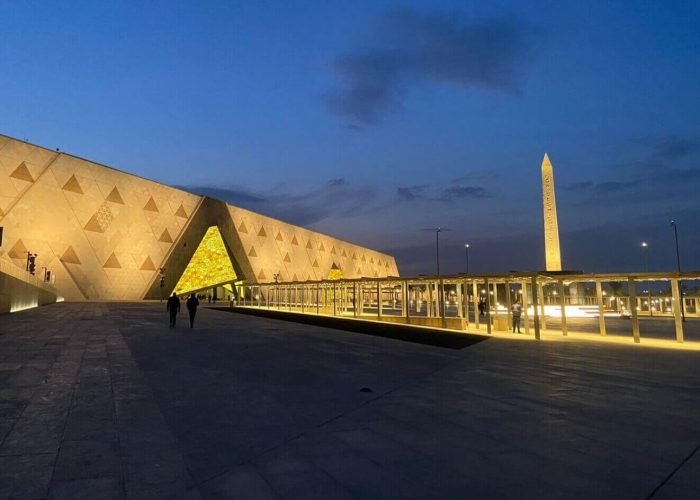
Day 1 — Cairo & Giza. Arrive at the Pyramids of Giza right at the 8am opening — in January this is the difference between a near-empty plateau and a packed one by 10am. Continue to the Solar Boat Museum and the Sphinx, then warm up with lunch overlooking the plateau. Afternoon at the Grand Egyptian Museum, and an early dinner, since Cairo’s evening chill sets in quickly after sunset.
Day 2 — Islamic & Coptic Cairo. Spend the cooler morning hours in Khan el-Khalili bazaar, then head to Old Cairo to see the Hanging Church and the Ben Ezra Synagogue. If your dates land near January 6–7, ask your guide about visiting the Coptic quarter that evening to witness the Christmas atmosphere firsthand.
Day 3 — Fly to Luxor, East Bank. Morning flight to Luxor, checking into your hotel or boarding your Nile cruise by early afternoon. Visit Karnak Temple in the late-morning warmth once the chill has lifted, followed by Luxor Temple at golden hour, when January’s soft winter light is at its most photogenic.
Day 4 — Luxor West Bank. An early, layered start at the Valley of the Kings before the tour-bus crowds peak mid-morning, then Hatshepsut’s Temple and the Colossi of Memnon. Afternoon rest, then an evening felucca sail — pack a proper jacket, since the river breeze after sunset is genuinely cold in January.
Day 5 — Aswan or Return. Either continue south by cruise or short flight to Aswan for the High Dam, Philae Temple, and a Nubian village visit, or fly directly home from Luxor. Travellers with an extra day or two can extend south to Abu Simbel, departing Aswan well before dawn for the drive or short flight.

Why January Draws the Biggest Crowds of the Year
Three demand drivers stack on top of each other for Egypt in January, which is why it consistently ranks as the country’s busiest month. First, European and North American winter-sun travellers escape cold weather at home just as the New Year holidays wind down. Second, Coptic Christmas on January 7 adds domestic travel and family gatherings on top of the international volume.
Third, Nile cruise cabin inventory is fixed, so even with every ship sailing, the most popular routes sell out well ahead of the month. The result: hotels in Cairo, Luxor, and Aswan, along with the better cruise ships, are frequently at or near full capacity through the first three weeks of January, leaving last-minute travellers with only unsold, often pricier, inventory to choose from.
Common Mistakes Travelers Make in Egypt in January
Packing only for daytime warmth. The single most common January mistake — travellers see “19–24°C” and pack like it’s mild spring weather everywhere, then get caught out by 7–9°C nights in Luxor and Aswan with nothing warmer than a light cardigan.
Booking Nile cruises or Abu Simbel transfers last-minute. January cabin and transfer inventory is the tightest of the year; waiting until 4–6 weeks before travel routinely means settling for a lower cabin category or a less convenient Abu Simbel departure time.
Skipping sunscreen because it “doesn’t feel hot.” UV index still reaches 4–5 across most of the country even in January’s cooler air — sunburn is still very possible on a full day at an open-air temple.
Underestimating New Year and Coptic Christmas pricing. Travellers who don’t account for the New Year’s Eve supplement or the general demand spike around January 6–7 are often surprised by quotes that run well above what they budgeted from earlier research.
Forgetting cash for markets, tips, and felucca rides. Cards work at hotels and larger restaurants, but bazaars, small boat operators, and most tipping situations remain cash-only — see our guide to tipping in Egypt for exact amounts by service.
Not planning for Sinai’s cold at altitude. Travellers heading up Mount Sinai for sunrise in shorts and a t-shirt because the coast felt warm are a near-daily occurrence in January — the summit genuinely drops below freezing overnight.
What to Pack for Egypt in January
Cairo & Giza: Warm layers for morning and evening (9°C lows), a proper jacket or coat, comfortable closed walking shoes, a scarf for mosques and churches, and an umbrella for the odd rain shower.
Luxor & Aswan: Light layers for 23–24°C days, a genuinely warm jacket or fleece for evenings (down to 7–8°C), a hat for midday sun, and gloves if you’re prone to feeling the cold on an open-deck cruise at night.
Red Sea (Hurghada/Sharm): Swimwear plus a light jacket for evenings, a 5mm wetsuit if diving, and a warm layer for the boat ride out to dive or snorkel sites, where wind chill is noticeable even on a sunny day.
Sinai/Mount Sinai: Genuine winter gear — thermal layers, a heavy jacket, gloves, and a hat — for anyone hiking to the summit for sunrise, where sub-zero temperatures are common in January.
Essential Tips for Visiting Egypt in January
Book Nile cruises and Abu Simbel transfers months ahead. January is the single most booked-out month of the year for both — 4–6 months’ lead time is genuinely advisable if your dates are fixed.
Pack real layers, not just a light jacket. The daily temperature swing in Luxor and Aswan — warm afternoons, cold nights — is the single most common packing mistake January travellers make.
Plan around Coptic Christmas if your dates allow. January 6–7 is a rare, authentic window into Egypt’s Christian heritage that most visitors never see.
Expect the fullest sites of the year. The Pyramids, Karnak Temple, and Abu Simbel see their heaviest crowds in January — arrive at opening time without exception.
Confirm your Red Sea plans include a wetsuit if diving. Water temperatures around 21–22°C are comfortable for swimming but genuinely cold for extended snorkeling or diving without one.
Carry Egyptian Pounds for markets, tips, and felucca rides. Cards work at hotels and major restaurants, but bazaars, small boat operators, and street vendors remain largely cash-only — see our guide to tipping in Egypt for exact amounts.
How to Book Your Egypt in January Trip
- Lock in your travel dates first. Because January is Egypt’s tightest month for both hotels and Nile cruises, fixing your dates early is the single most important step — everything else follows from it.
- Decide your route: Cairo-only, Cairo plus Nile cruise, or Cairo plus Red Sea. January’s cool, comfortable weather makes all three genuinely workable — see a 5-day Cairo & Luxor itinerary for a compact route, or a 9-day Cairo, Nile Cruise & Hurghada itinerary if you want temples and beach time in one trip.
- Book your Nile cruise or hotel 4–6 months ahead. This is not a “recommended” timeline in January — it’s close to essential if you want a specific ship, cabin category, or hotel view.
- Confirm Abu Simbel and any Coptic Christmas plans early. Both are add-ons with genuinely limited capacity around the first two weeks of January specifically.
- Speak with a specialist for a tailored itinerary. Every Egypt trip benefits from local knowledge of exactly what’s available on your dates — our travel tips guide covers more general planning basics, and our team can build a custom quote around your January travel window.
Frequently Asked Questions
Is January a good time to visit Egypt?
Yes — weather-wise, January is one of the best months of the year, with the coolest, most comfortable daytime temperatures for sightseeing. The trade-off is that it’s also the most crowded and most expensive month, so book well ahead if your dates are fixed to January.
Is Egypt cold in January?
It can be, especially at night. Daytime highs are mild (19–24°C depending on region), but Upper Egypt’s desert nights regularly drop to 7–9°C, and Mount Sinai’s summit can fall below freezing. Pack proper layers.
Can you swim in the Red Sea in January?
Yes, though it’s the coolest water of the year at around 21–22°C. Swimming is comfortable for most people; divers typically wear a 5mm wetsuit for extended time underwater.
How far in advance should I book a January Nile cruise?
4–6 months is a safe minimum. January is the busiest cruise month of the year, and the most popular ships and cabin categories sell out well before the New Year.
Is January the most expensive month to visit Egypt?
It’s one of the two most expensive months, alongside December, driven by Christmas, New Year, and Coptic Christmas demand all landing within a few weeks of each other. Prices generally ease from mid-February onward.
What’s the best week in January to avoid the worst crowds?
The final week of January is consistently the quietest of the month — the New Year and Coptic Christmas rushes have both passed, and the February half-term and Sun Festival crowds haven’t yet arrived.
Ready to plan around it?
Explore our Egypt tour packages or Nile cruise options to build your January trip